
How to Make Drum and Bass Bass: A Guide to Every Bass Type
Every drum and bass bass starts the same way: a clean sub you feel and a mid bass you hear. This guide explains both, then walks through every main type of DnB bass, from the reese and neuro basses to foghorns, rollers, jump up and liquid, with a sound clip or screenshot from our own tutorials and a link to the full step-by-step for each.
Part of our how to make drum and bass guide: this hub goes deeper on steps 4 and 5, the sub bass and the mid bass.
Quick answer
What is drum and bass bass made of?
Drum and bass bass is almost always two layers: a clean, mono sine sub you feel, and a mid bass above it that gives the track its character. The main mid-bass types are the reese, neuro bass and stabs, the foghorn, roller and techy roller basses, jump-up wobbles and formant basses, and warm liquid basses.
Sub bass vs mid bass: the two layers
The sub bass is a pure sine wave that plays the lowest notes: you feel it more than you hear it, and it stays mono. The mid bass is the layer you hear, full of harmonics, distortion and movement. Almost every DnB bass in this guide is a mid bass sitting on top of a separate sub.
Splitting the job in two is what lets drum and bass basses be so aggressive without wrecking the mix. The sub stays steady and clean, so the low end hits the same on every note. The mid bass can then be as distorted, filtered and wide as you like, because none of that touches the frequencies the sub owns.
| Layer | What it is | How to treat it |
|---|---|---|
| Sub bass | A sine wave on the lowest notes of the bassline | Mono, steady level, ducked around the kick, no stereo effects |
| Mid bass | The sound with character: reese, FM, neuro, roller… | Low-cut so it doesn’t clash with the sub; distortion, filters, width and effects all go here |
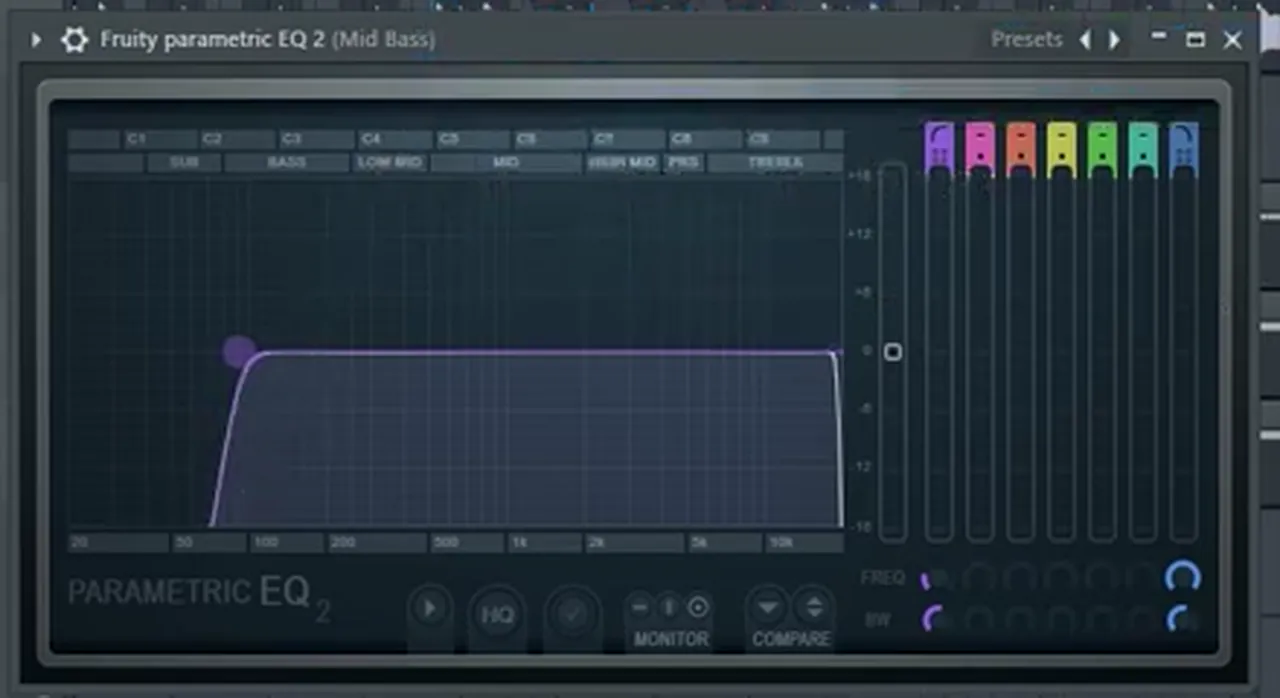
In our liquid DnB tutorial in FL Studio, the sub is high-cut at around 125 Hz and the mid bass is low-cut at around 90 Hz, so the two overlap slightly and blend instead of clashing. Our mixing guide’s low-end section covers the rest: keeping one mono sub, ducking it under the kick and making it audible on small speakers.
Listen: a mid bass with the sine sub underneath 11 sec
1.Sub bass
Sub bass is the deep, clean foundation under every drum and bass track: usually a plain sine wave that follows the root notes of the bassline. It is felt on a club system more than heard, so the goal is a steady, mono sub that never clashes with the kick or the mid bass.
- Used inEvery style of drum and bass
- Typical synthAny synth with a sine wave
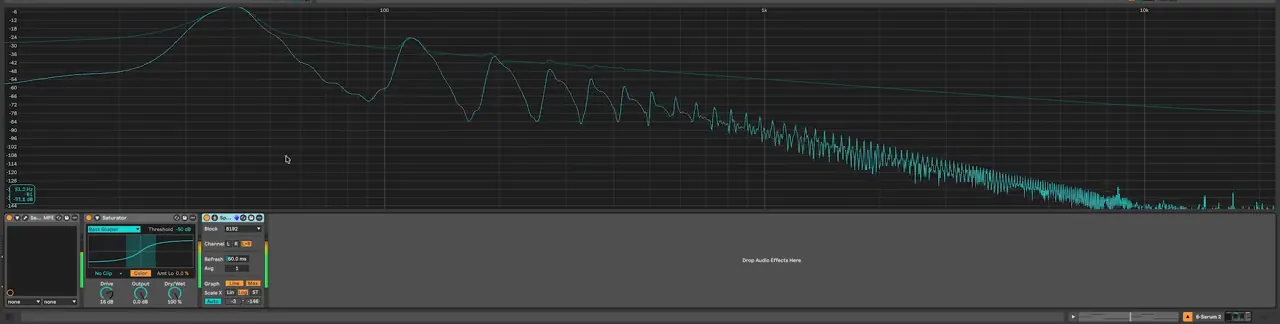
The key idea: keep it simple and clean, and give it a little help on small speakers. A sine wave has no harmonics, so phones and laptops barely reproduce it. In our sub video, Telomic points out that dancefloor and jump-up basses already live higher up, while liquid and minimal tracks need more care (watch at 0:28). His fixes include doubling the sine with an octave (2:13) and gentle saturation to add harmonics (4:51).
Our sub video with Telomic: ways to make a sine sub audible on phones and laptops, from octave doubling to saturation and a low-pass reese layer.
Listen: a plain sine sub, then with saturation 11 sec
Step by stepHow to make a DnB sub bass →
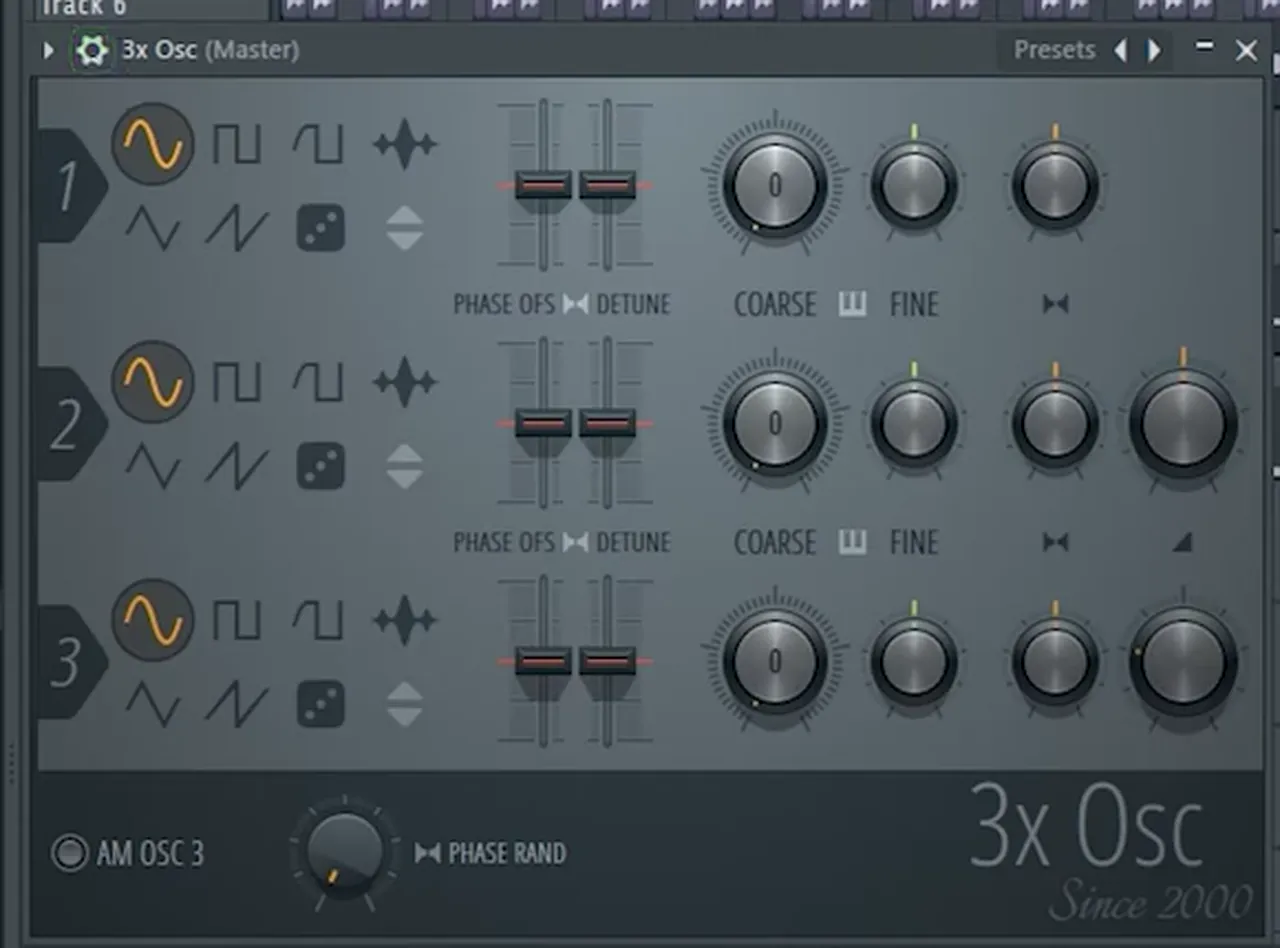
Want the short version now? Our start-to-finish guide’s sub step builds a sub from FL Studio’s stock 3x Osc in a few clicks.
2.Reese bass
A reese bass is two or more detuned saw waves played together. Because they are slightly out of tune, the waves drift in and out of phase, so the sound swells and rolls even on one held note. The name comes from Kevin Saunderson’s Reese alias and his 1988 track “Just Want Another Chance”.
- Used inNeurofunk, techstep and darker DnB; also liquid and dancefloor
- Typical synthSerum 2 in our video; Vital works too
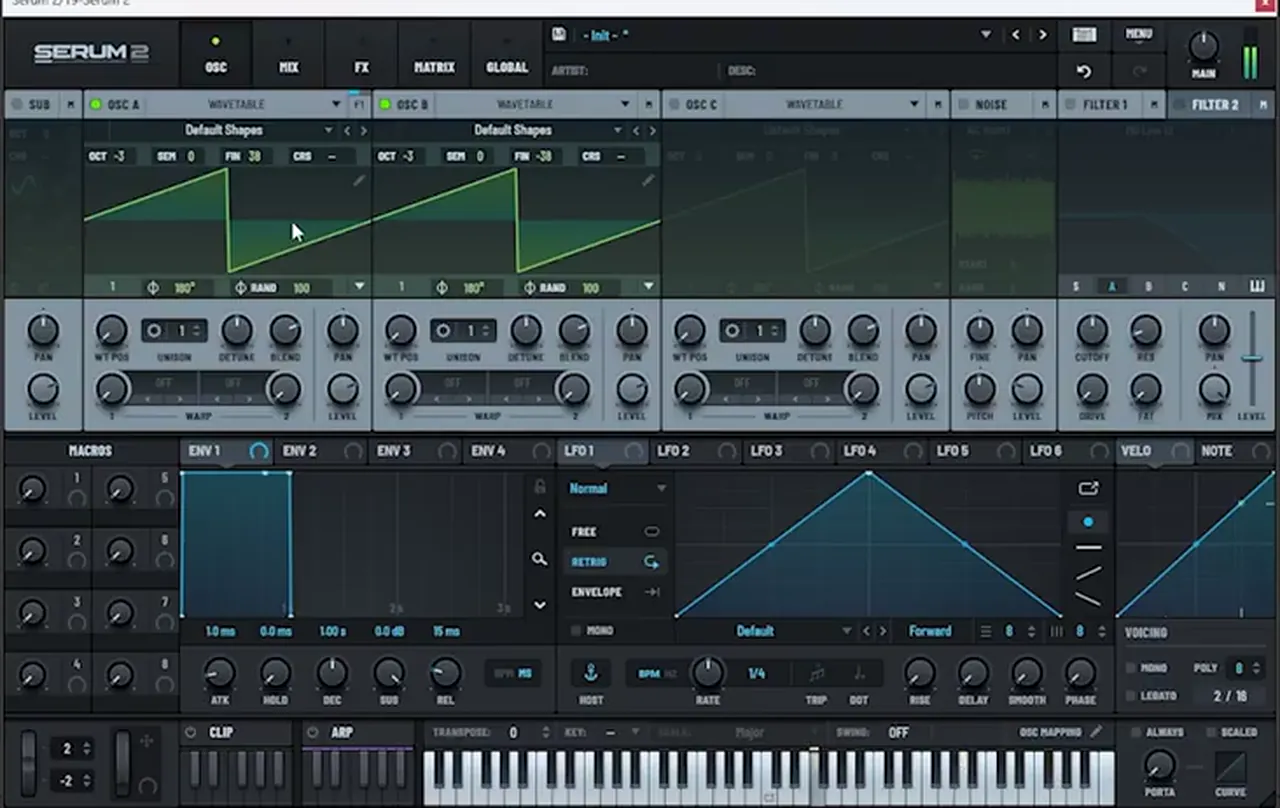
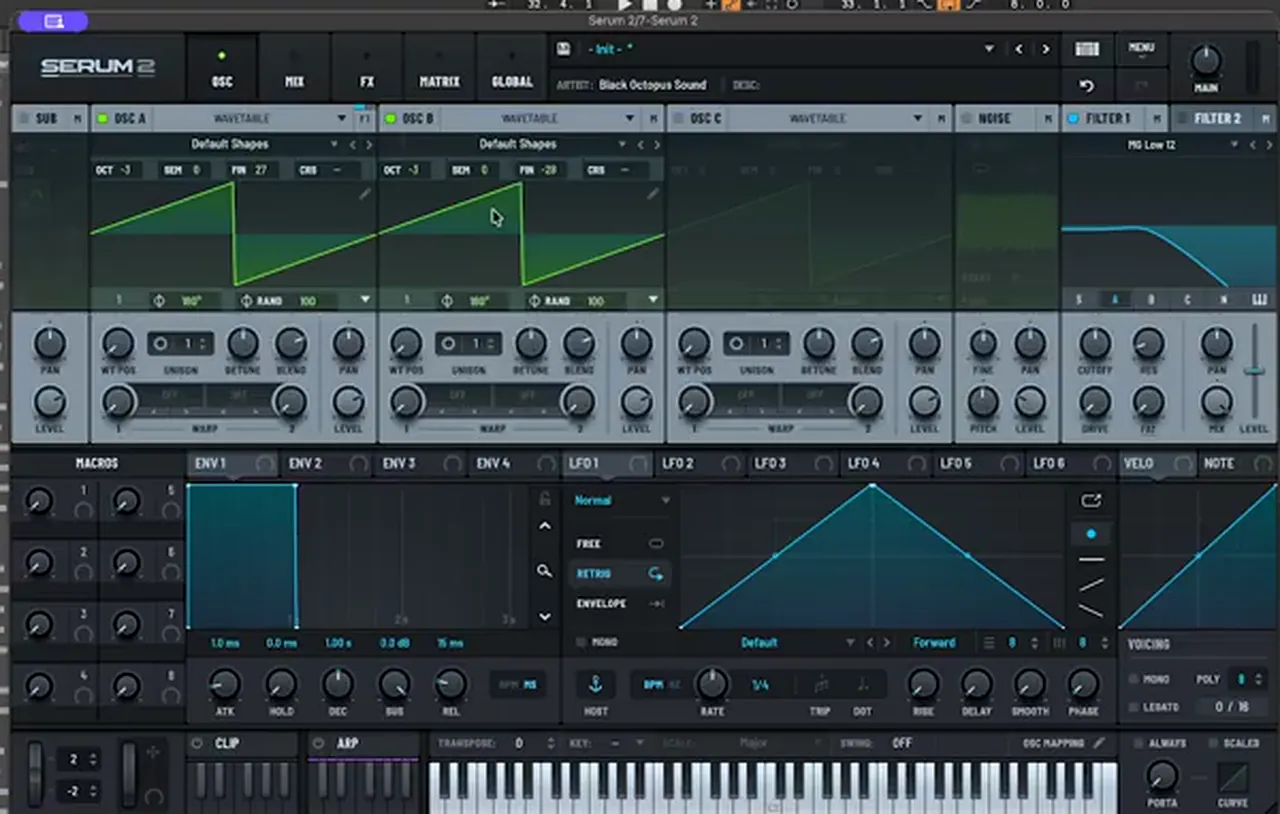
The key idea: stack two saws and detune them in opposite directions. In our Serum 2 video both saws drop three octaves and are fine-tuned to +38 and −38 cents (watch at 1:28), then a notch filter and white noise shape the tone. Serum 2’s Splitter effect then treats the lows, mids and highs separately (4:27), with everything below 90 Hz kept mono (5:39).
Our Serum 2 reese video: two detuned saws, a notch filter and noise, then the Splitter effect for the lows, mids and highs.
Listen: the finished Serum 2 reese 10 sec
Step by stepHow to make a reese bass (plus Mefjus and Kove styles) →
3.Neuro bass and bass patterns
A neuro bass is the aggressive, constantly moving mid bass of neurofunk. It is usually built from FM and distortion, shaped by a resonant filter that an LFO moves, and written as short call-and-response patterns. Noisia’s sound is the classic reference point for this style.
- Used inNeurofunk
- Typical synthVital in our tutorial (FM, filter, LFO)
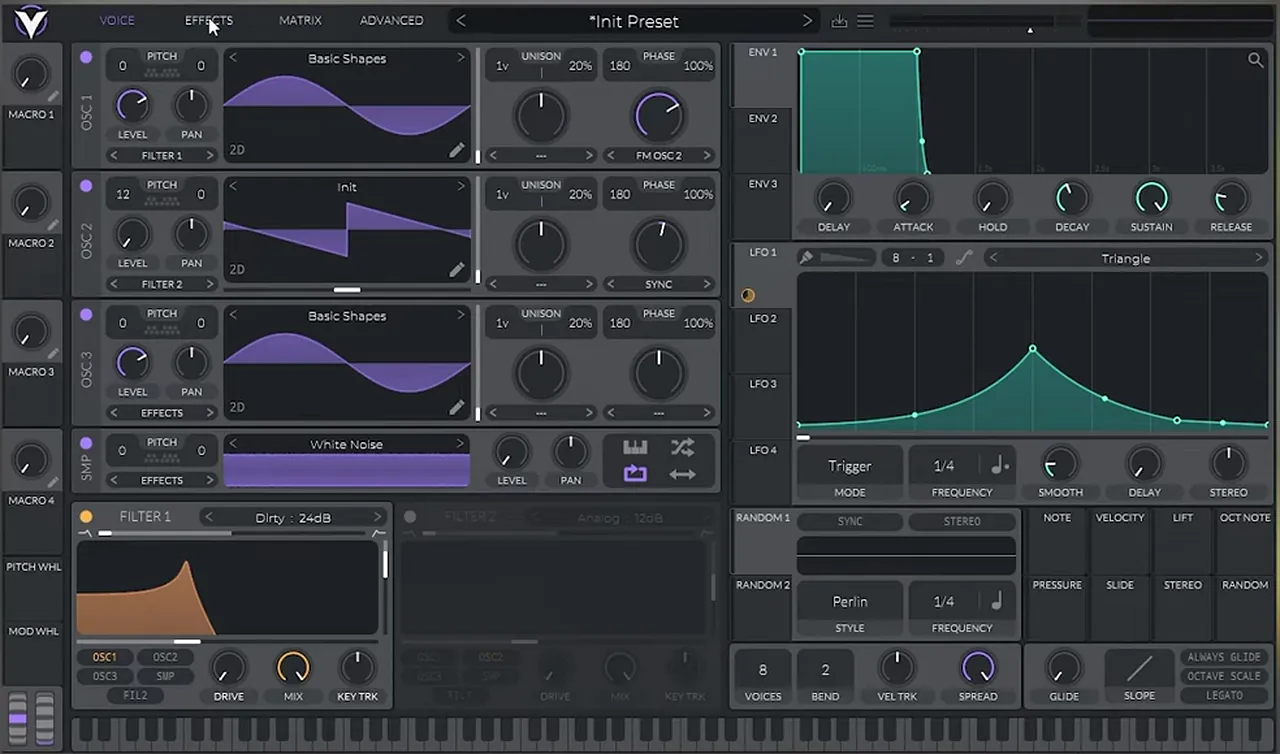
The key idea: FM plus a moving filter. Our Noisia-style patch puts a sine on oscillator 1 and frequency-modulates it from oscillator 2, an octave up in sync mode, then adds a sine sub and some white noise. It all runs through Vital’s Dirty 24dB filter, with LFO 1 moving the cutoff at a dotted 1/4, and distortion glues the layers together.
Listen: the finished Noisia-style neuro bass 10 sec
Step by stepHow to make neuro basses like Noisia in Vital →
Writing neuro bass patterns
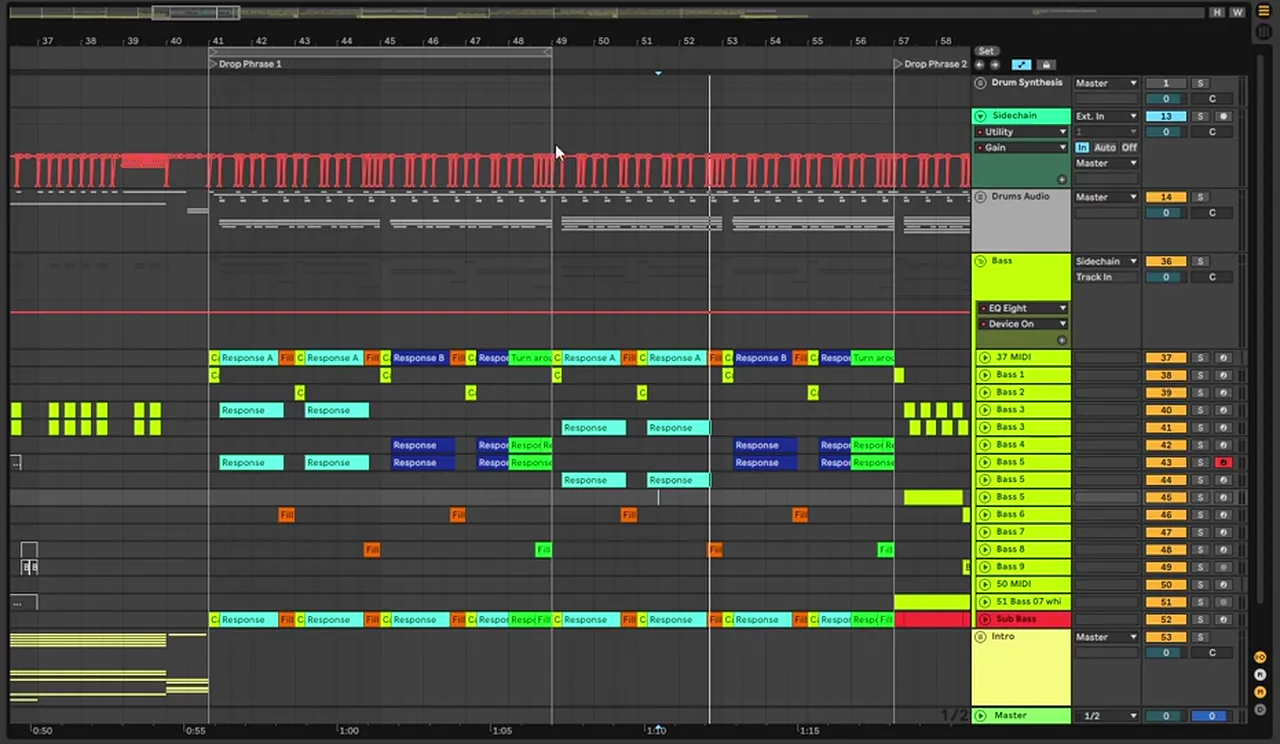
A great neuro patch still needs a pattern. We use call and response: a “call” bass on the first beat of a 2-bar loop, response basses in the middle and a fill or turnaround on the last beat. Repeat it, change the sounds and tone rather than the rhythm, and end each 8-bar phrase with a bigger turnaround.
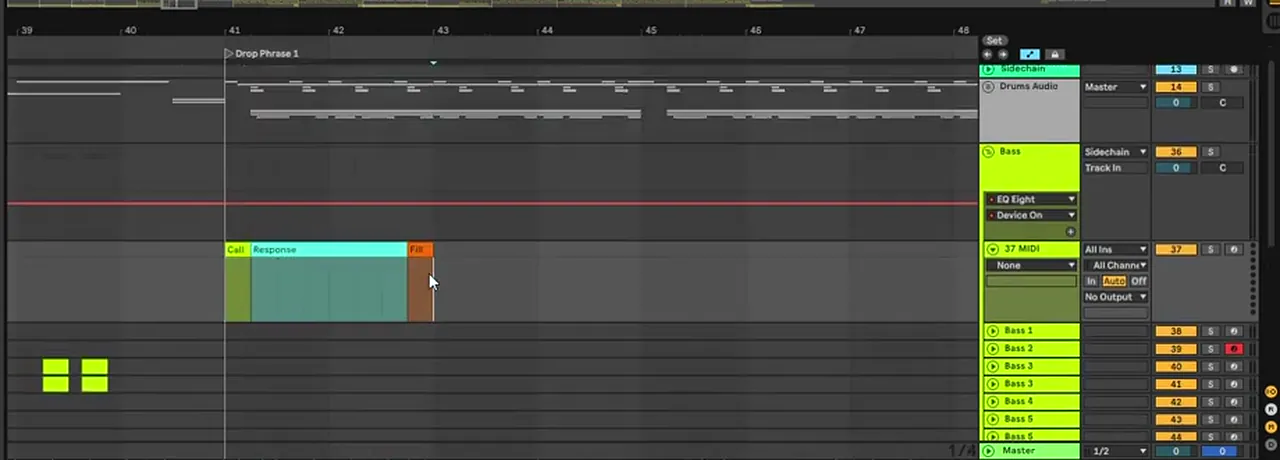
Listen: a call-and-response sequence with a turnaround 11 sec
Step by stepHow to write neuro bass patterns →
4.Neuro stabs (with Icicle)
A neuro stab is a short, punchy bass hit that answers the main riff in neurofunk and techy drum and bass. Instead of a sustained note, the filter snaps shut on every hit, so the stab lands like a drum and leaves space for the next sound.
- Used inNeurofunk and techy DnB
- Typical synthVital in our tutorial
The key idea: an LFO used as a filter envelope. In our tutorial, Icicle plays two notes a third apart through a saw into Vital’s Analog 24 dB filter, then sets LFO 1 to Trigger mode at 1/4 and redraws it as a fast-falling curve on the cutoff. FM from a quiet second oscillator and a third layer through filter 2 add bite and texture.
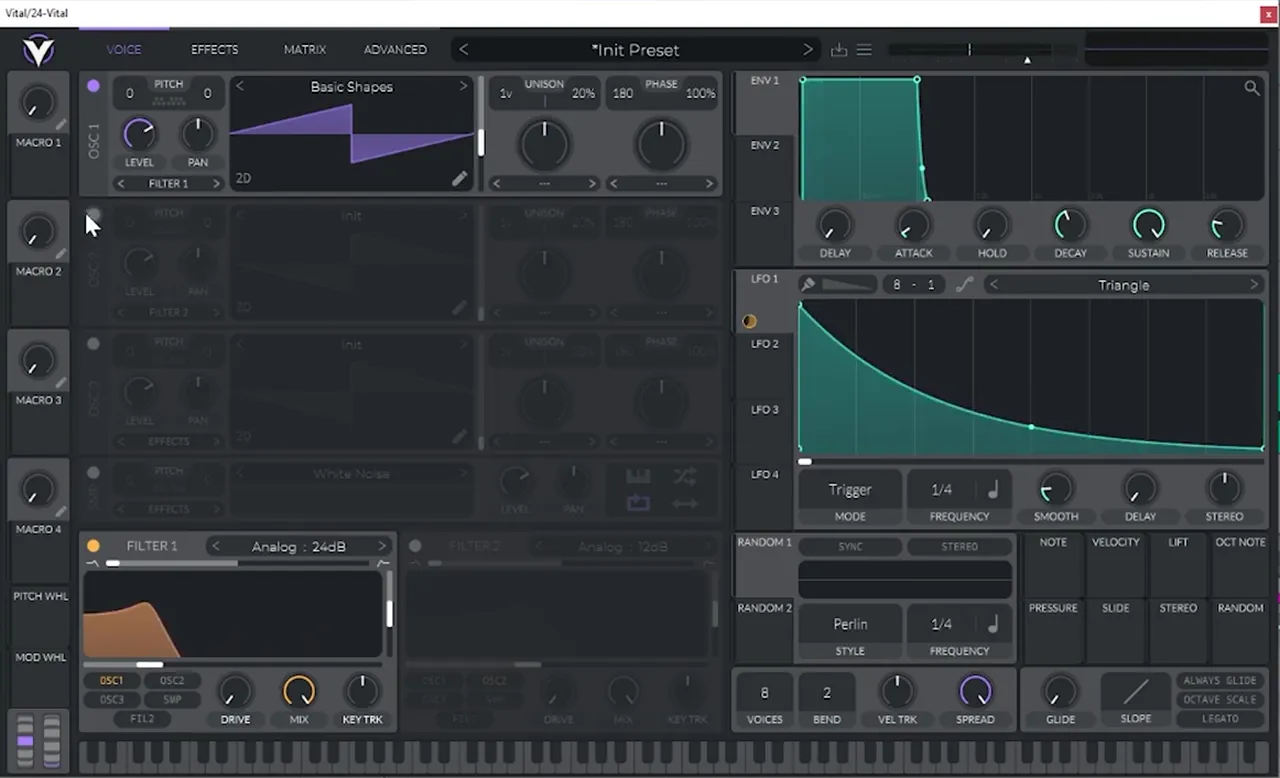
Listen: Icicle’s finished stab 6 sec
Step by stepHow to make a neuro stab bass in Vital with Icicle →
5.Foghorn bass
A foghorn bass is a thick, horn-like drum and bass bass with a slow, swelling movement. It is a heavy, sustained sound for big drops, and most of its character comes from distortion: clean layers go in, and hard clipping turns them into the horn.
- Used inHeavy, sustained drops in neurofunk and dancefloor DnB
- Typical synthVital in our tutorial (FM + Hard Clip)
The key idea: three layers, then heavy distortion. Our Vital patch combines a high FM layer (oscillator 1 modulated by a synced, octave-up saw), a sine sub and white noise. Chorus, OTT-style multiband compression and a filter swept slowly by LFO 1 come next, and Hard Clip distortion on all three layers is what makes it a foghorn.
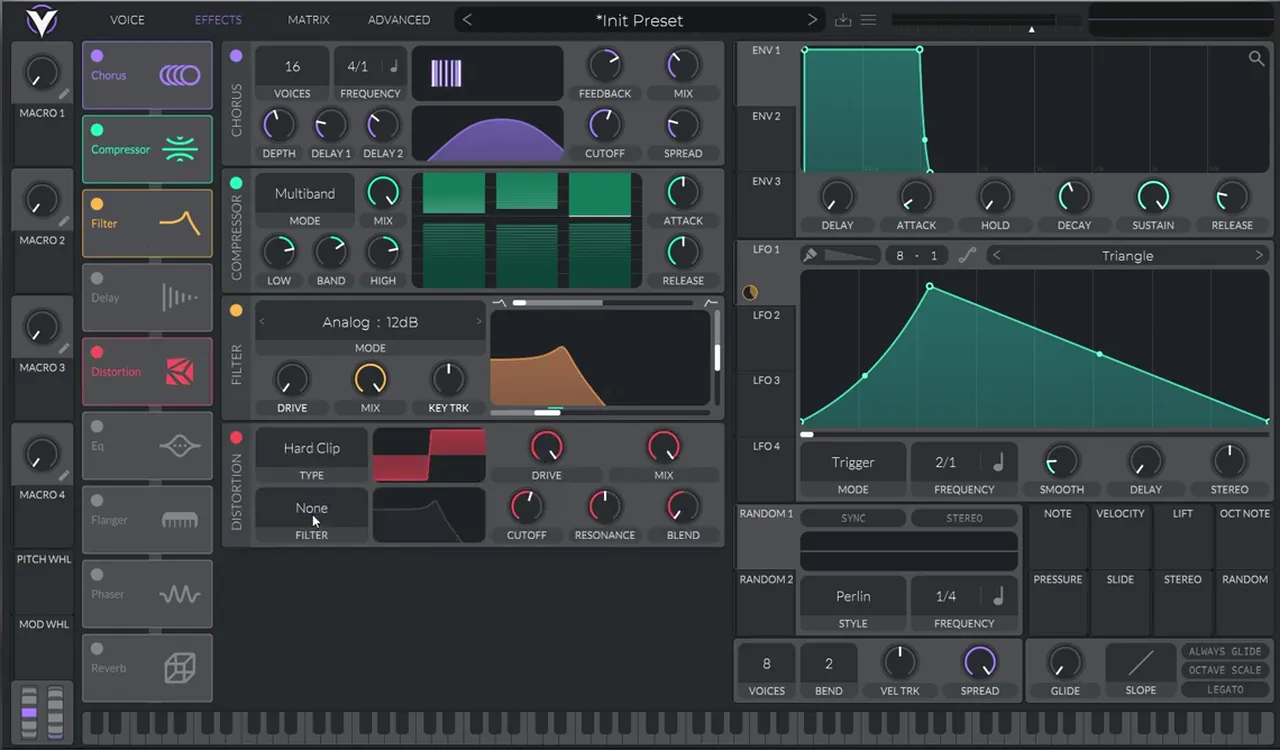
Listen: the finished foghorn with pitch movement 11 sec
Step by stepHow to make a foghorn bass in Vital →
6.Roller and techy roller bass
A roller bass is a rolling, repetitive bassline that keeps the groove moving under the drums rather than landing as one big hit. Techy rollers, the style DLR and the Sofa Sound label are known for, push it further with precise, filtered movement on every note.
- Used inRollers and techy rollers
- Typical synthVital (roller) and Serum (techy roller) in our tutorials
The key idea in Vital: rhythm from an LFO. Our roller patch runs FM from oscillator 2 into oscillator 1, then LFO 1, in Trigger mode at 1/8, pulses the level of that FM layer and a gritty noise sample over a steady sine. Distortion with an accent on the drive and a falling pitch LFO finish it.
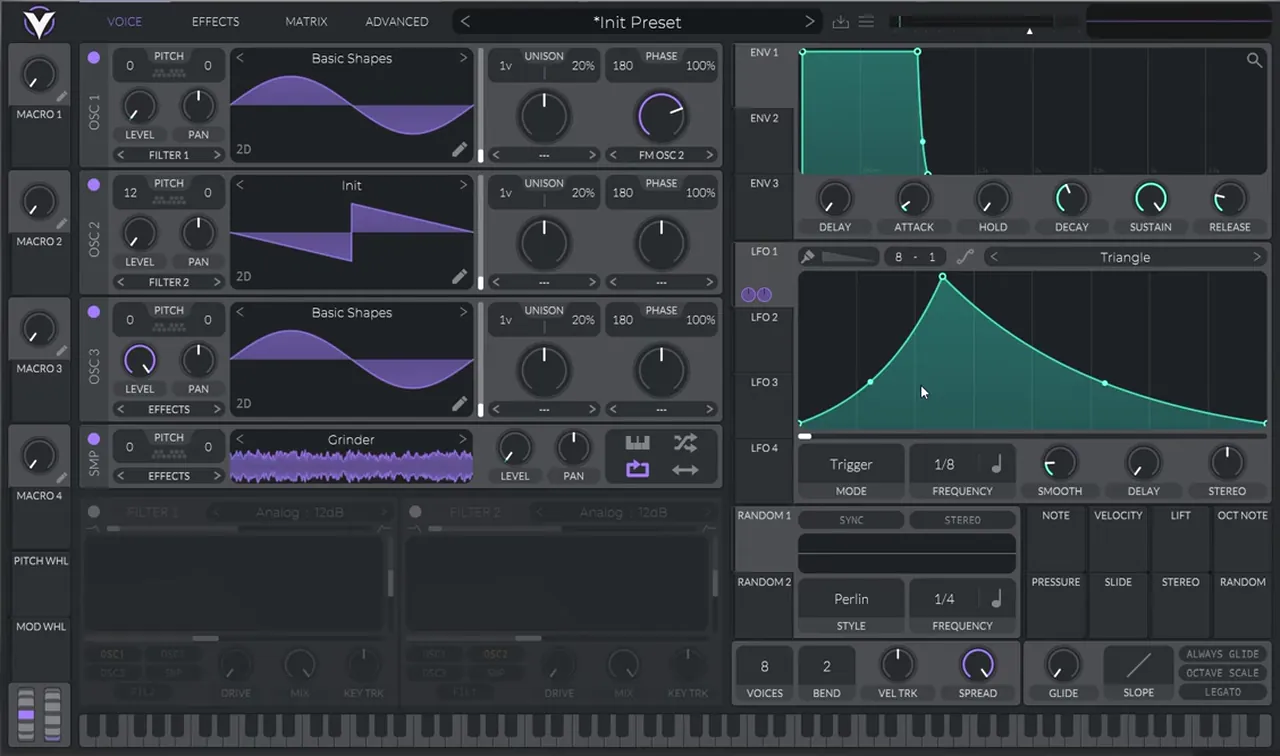
Listen: the finished roller bass in Vital 6 sec
Step by stepHow to make a roller bass in Vital →
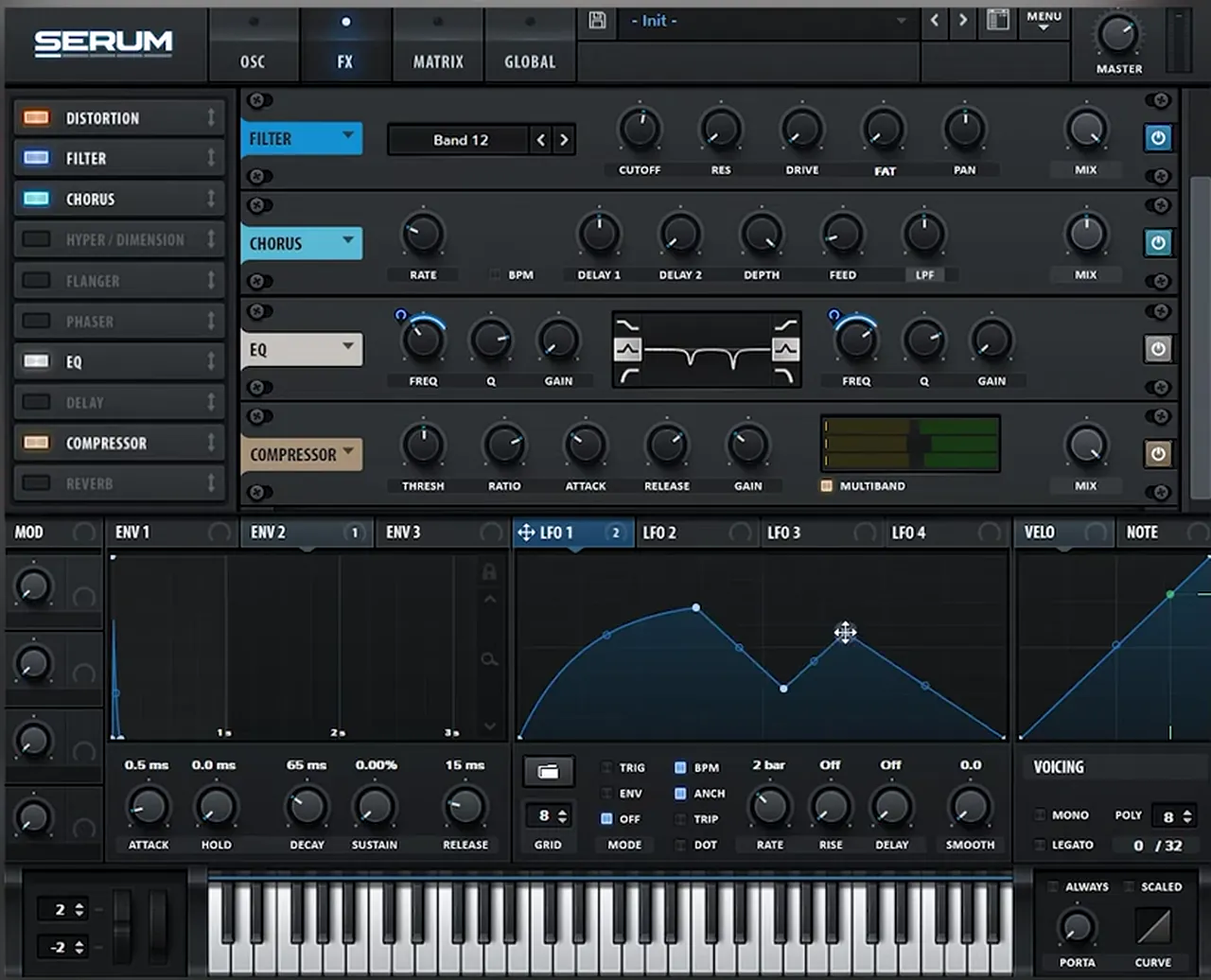
The key idea in Serum (techy): movement in a band-pass. Our techy roller starts with two sines, FM from oscillator B into A, and a short envelope on the master tune for punch. After distortion, the movement comes from a band-pass filter and notch EQ moved by an LFO and clip automation, then OTT and parallel layers.
Listen: the finished techy roller bass 12 sec
Step by stepHow to make a techy roller bass like DLR & Sofa Sound in Serum →
7.Jump-up bass
Jump-up bass is the bouncy, riff-led mid bass of jump-up drum and bass: big, playful sounds that wobble, “talk” and jump between notes. The riff is the hook of the track, so the bass sits right in the mid range where every speaker can play it.
- Used inJump up
- Typical synthSerum in our jump-up videos
The key idea: movement you can hear in the mids. Wobbles come from an LFO moving a filter or a wavetable, formant basses use vowel-like filtering so the bass sounds as if it is speaking, and pitch slides between notes give the riff its bounce. A clean sine sub still goes underneath. Our jump-up tutorial covers our Serum videos on deep jump-up basslines, classic jump-up basses and modern formant basses, plus a bass inspired by Annix’s “Boomerang”.
Step by stepHow to make jump-up drum and bass →
8.Liquid bass
Liquid bass is the warm, rounded bass of liquid drum and bass. It supports the chords instead of fighting them: smooth tones with gentle harmonics, soft filter movement and little or no harsh distortion, usually following the root notes of the progression.
- Used inLiquid drum and bass
- Typical synthSerum in our Random Movement-style video; stock synths work too
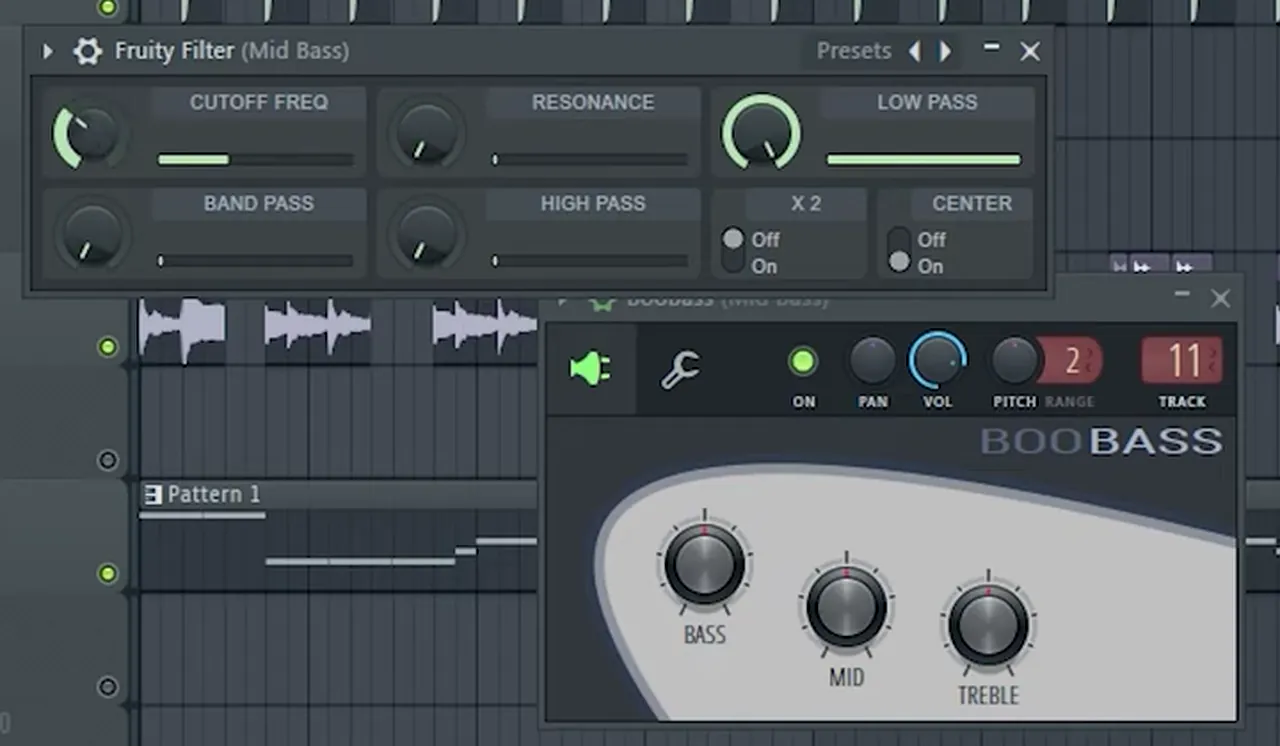
The key idea: warmth over aggression. Start from a simple waveform, add harmonics gently with saturation, then filter away the harsh top so the bass sounds deep and smooth. In our liquid DnB tutorial in FL Studio the mid bass is a stock BooBass with a waveshaper and a low-pass filter, over a sine sub. Our Random Movement-style liquid bass video in Serum takes the same idea further.
Step by stepHow to make a liquid DnB bass like Random Movement →
Writing the chords that the bass follows? See how to write liquid DnB chords.
9.Deep and minimal bass
A deep, minimal DnB bass keeps its energy in the lows and low mids: dark, rumbling and restrained, with texture instead of screaming highs. It suits deep and minimal drum and bass, where space in the mix matters as much as the bass itself.
- Used inDeep and minimal DnB
- Typical synthVital in our tutorial
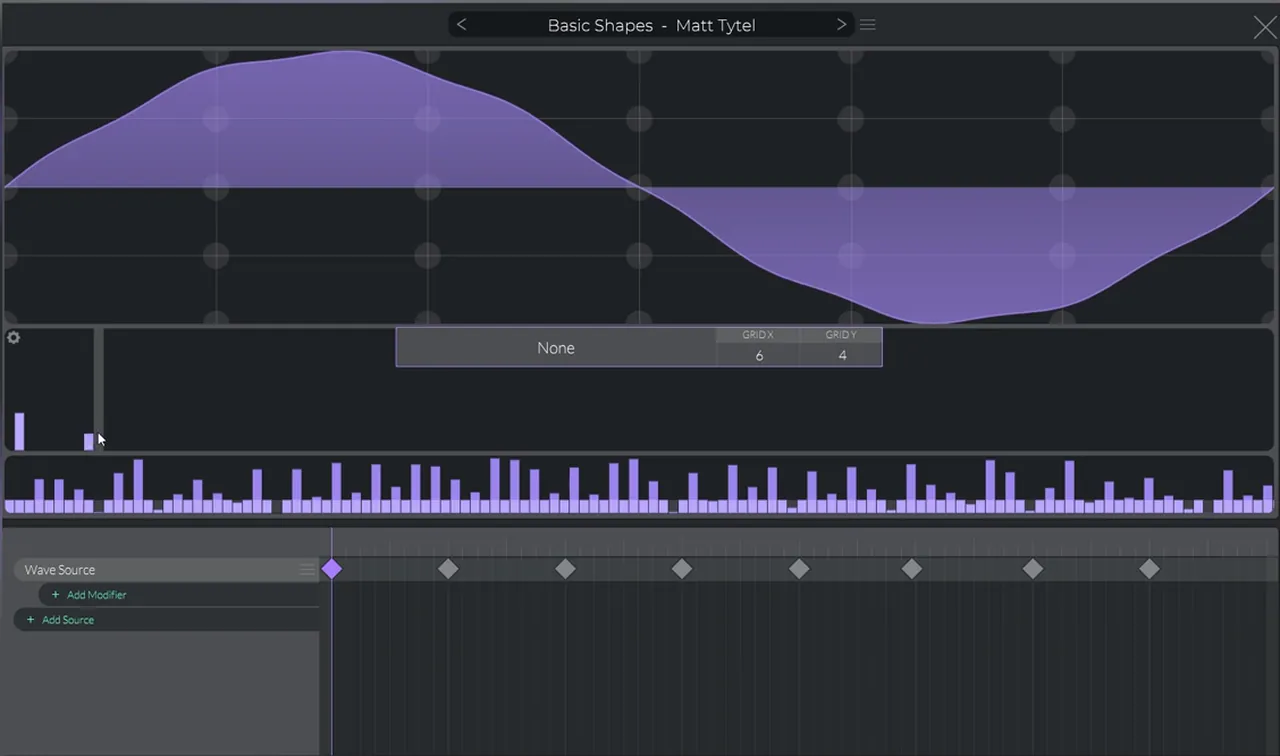
The key idea: basic waveforms, then texture from distortion. Our Vital patch draws one high harmonic into a sine, adds a unison saw through a filter swept by an LFO, mixes in an atmospheric noise sample, then lets distortion turn the sine, harmonic and noise into a rumbling texture. EQ and a notch filter keep it under control.
Listen: the finished minimal bass 10 sec
Step by stepDark, minimal DnB bass sound design in Vital →
Every DnB bass type compared
Use this table to pick a bass for your style: each type, the subgenres it suits, the synth we use for it in our tutorials, and where to learn it step by step. Every one of them sits on top of a separate sine sub.
| Bass type | Subgenre | Typical synth | Our tutorial |
|---|---|---|---|
| Sub bass | Every style | Any synth with a sine, e.g. FL Studio’s 3x Osc or Vital | DnB sub bass |
| Reese | Neurofunk, techstep, darker DnB | Serum 2 (also Vital) | Reese bass |
| Neuro bass | Neurofunk | Vital (FM) | Neuro bass like Noisia · Bass patterns |
| Neuro stab | Neurofunk, techy DnB | Vital | Stab with Icicle |
| Foghorn | Heavy, sustained drops | Vital (FM + distortion) | Foghorn bass |
| Roller | Rollers | Vital (LFO rhythm) | Roller bass |
| Techy roller | Techy rollers | Serum (band-pass movement) | Techy roller bass |
| Jump up | Jump up | Serum (wobble, formant) | Jump-up DnB |
| Liquid bass | Liquid | Serum; stock BooBass in FL Studio | Liquid bass |
| Deep / minimal | Deep and minimal DnB | Vital | Minimal bass |
Not sure which style you want to make? Our guide to drum and bass subgenres describes each one, from neurofunk to rollers, jump up and liquid.
Which synth should you use for DnB bass?
Any synth with FM, filters and LFOs can make every bass in this guide. Vital has a free version and covers most of our bass tutorials; Serum and Serum 2 appear in our reese, techy roller, jump-up and liquid videos.
- Vital (free version available). Our neuro, stab, foghorn, roller and minimal basses are all made in Vital, so you can follow them without buying anything. It has FM between oscillators, drawable LFOs and a full effects rack.
- Serum and Serum 2. Our techy roller is made in Serum, and our reese tutorial uses Serum 2, whose Splitter effect lets you process the lows, mids and highs of one sound separately inside the synth.
- Stock DAW synths. A sub needs nothing more than a sine: FL Studio’s 3x Osc does the job in our liquid tutorial.
The recipes carry over: a reese in Vital is still two detuned saws, and an FM bass in Serum is still one oscillator modulating another. For a wider look at synths and effects, see our best plugins for drum and bass.
Common DnB bass mistakes
- One layer doing everything. A single heavily distorted bass with its own low end will wobble in level from note to note. Split it into a sine sub and a mid bass.
- A stereo sub. Chorus, unison and detuned saws below about 100 Hz make the low end come and go, and it can collapse on mono systems. Keep the sub mono.
- Mid bass and sub fighting. Low-cut the mid bass where the sub takes over, so they overlap slightly instead of stacking.
- No ducking. The kick and the sub share the same space. Duck the bass on every kick and snare.
- Static sounds. DnB basses live on movement: filter LFOs, FM amount, pitch drops and automation.
- Random phase left on. Turn oscillator phase randomisation down so every note hits the same, as in our roller and techy roller tutorials.
- Changing the rhythm instead of the sound. In neuro patterns, keep the call-and-response rhythm and swap the sounds and tone.
- Only checking on headphones or only on a laptop. Headphones and subs reveal the low end; small speakers show whether the mid bass carries the riff.
FAQ: drum and bass bass
How do you make drum and bass bass?
Build it in two layers. Put a clean, mono sine sub at the bottom to carry the low notes, then design a mid bass above it with harmonics and movement: detuned saws for a reese, or FM, filters, LFOs and distortion for neuro, foghorn and roller basses. Low-cut the mid bass so it doesn’t fight the sub, and duck both around the kick.
What are the main types of DnB bass?
The sub bass sits under almost every track. Above it, the common mid-bass types are the reese (detuned saws), neuro basses and stabs, the foghorn, roller and techy roller basses, deep and minimal basses, jump-up wobbles and formant basses, and warm, rounded liquid basses.
What is the difference between sub bass and mid bass?
The sub bass is a pure sine wave that plays the lowest notes. You feel it more than you hear it, and it stays mono. The mid bass sits above it and gives the bass its character, with harmonics, distortion, filter movement and stereo width. Most DnB basses use both layers at once.
What is a reese bass in drum and bass?
A reese bass is two or more detuned saw waves played together. Because they are slightly out of tune, they drift in and out of phase, so the sound rolls and growls even on one held note. The name comes from Kevin Saunderson’s Reese alias and his 1988 track “Just Want Another Chance”.
What is a neuro bass?
A neuro bass is the aggressive, constantly moving mid bass of neurofunk. It is usually built from FM and distortion, shaped by a resonant filter that an LFO moves, and written as short call-and-response patterns rather than one long note. Our Noisia-style tutorial builds one in Vital.
Can you make DnB bass with free plugins?
Yes. Vital has a free version, and most of our bass tutorials use it: the neuro, stab, foghorn, roller and minimal basses are all made in Vital. A sine sub needs nothing more than a stock synth, such as 3x Osc in FL Studio.
Should DnB sub bass be mono?
Yes. Keep the sub mono and put any stereo width higher up, in the mid bass and pads. Detuned layers such as a reese are unstable in phase, so mono the low end of those too, and check it on headphones or a subwoofer, as phone and laptop speakers can’t play sub frequencies.
Where can I get free DnB bass presets?
The Vital Starter Preset Pack in DNB Academy Free Access is a neuro DnB starter pack for Vital, with neuro bass, pluck and lead presets, and it works with the free version of Vital. Free Access is a free account with no card needed.

Free download
Free Vital bass presets to take apart
The quickest way to learn bass design is to open a finished patch and see how it moves. The Vital Starter Preset Pack gives you:
- A neuro DnB starter pack for Vital
- Neuro bass presets
- Pluck and lead presets
- Works with the free version of Vital
It’s one of seven free sample and preset packs in DNB Academy Free Access, along with the mixing and mastering e-books and the 3‑day DnB challenge. Join 40,000+ producers in Free Access. Free account, no card needed.
Go deeper
Bass presets to learn from
Want finished basses to study and use in your tracks? These preset bundles are built around the bass styles above.
-
 Preset bundle
Neuro Essentials Serum preset bundle
100 Serum presets for neurofunk, including 50 basses, plus FX, drums, pads and synths.
Preset bundle
Neuro Essentials Serum preset bundle
100 Serum presets for neurofunk, including 50 basses, plus FX, drums, pads and synths.
-
 Preset bundle
Icicle Vital preset bundle
100+ Vital presets for deep, techy and roller drum & bass, including 40 basses, plus leads, pads and FX.
Preset bundle
Icicle Vital preset bundle
100+ Vital presets for deep, techy and roller drum & bass, including 40 basses, plus leads, pads and FX.
-
 Preset bundle
Frenzy Serum preset bundle
100+ Serum presets for jump up, including 53 basses, plus arps, leads, pads, drums and FX.
Preset bundle
Frenzy Serum preset bundle
100+ Serum presets for jump up, including 53 basses, plus arps, leads, pads, drums and FX.
Every artist course, preset bundle and sample pack is also in The Vault. Browse courses
Related tutorials
All tutorials →-
 Guide · Beginners
How to Make Drum and Bass: A Step-by-Step Guide
19 min read · Guide
Guide · Beginners
How to Make Drum and Bass: A Step-by-Step Guide
19 min read · Guide
-
 Guide · Mixing
How to Mix Drum and Bass: A Mixdown Guide
Guide · Low end, drums, loudness
Guide · Mixing
How to Mix Drum and Bass: A Mixdown Guide
Guide · Low end, drums, loudness
-
 Guide · Subgenres
Drum and Bass Subgenres: 12 Types of DnB
13 min read · Guide
Guide · Subgenres
Drum and Bass Subgenres: 12 Types of DnB
13 min read · Guide
-
FL Studio · Liquid
How to Make Liquid Drum and Bass in FL Studio
11 min read · Video + guide
Next steps
Pick one bass type, follow its tutorial in Vital or Serum, then put a mono sine sub under it and write a 2-bar call-and-response pattern. Then build the rest of the track around it:
Free Access
Seven free DnB sample and preset packs, including the Vital Starter Preset Pack, plus e-books and a 3-day challenge.
Get free packsThe full guide
Tempo, drums, bass, chords, arrangement and mixdown: every step of a DnB track.
Read the guide1:1 Mentorship
Personal guidance on your music from a mentor, built around your goals.
See the mentorship50,000+ producers have joined DNB Academy, and our producer Discord has 5,300+ members.