Tempo & arrangement guide
Drum and Bass BPM and Song Structure: How to Arrange DnB
Most drum and bass sits between 170 and 176 BPM, and 174 BPM is the most common modern tempo. Tracks are arranged in 8, 16 and 32-bar blocks so DJs can mix them: intro, build, drop 1, breakdown, build, drop 2 and outro. Below are typical tempos, bar counts and how to arrange each part.
- Typical tempo170–176 BPM
- Most common174 BPM
- Phrases8, 16 and 32 bars
- Drop lengthOften 32–64 bars
What BPM is drum and bass?
Drum and bass is usually produced between about 170 and 176 BPM, and 174 BPM is the most common tempo for modern tracks. Some styles drift a little: classic jungle often ran slower, roughly 160–170 BPM, while some modern jungle and harder styles push slightly above 175. Treat these as typical ranges, not rules.
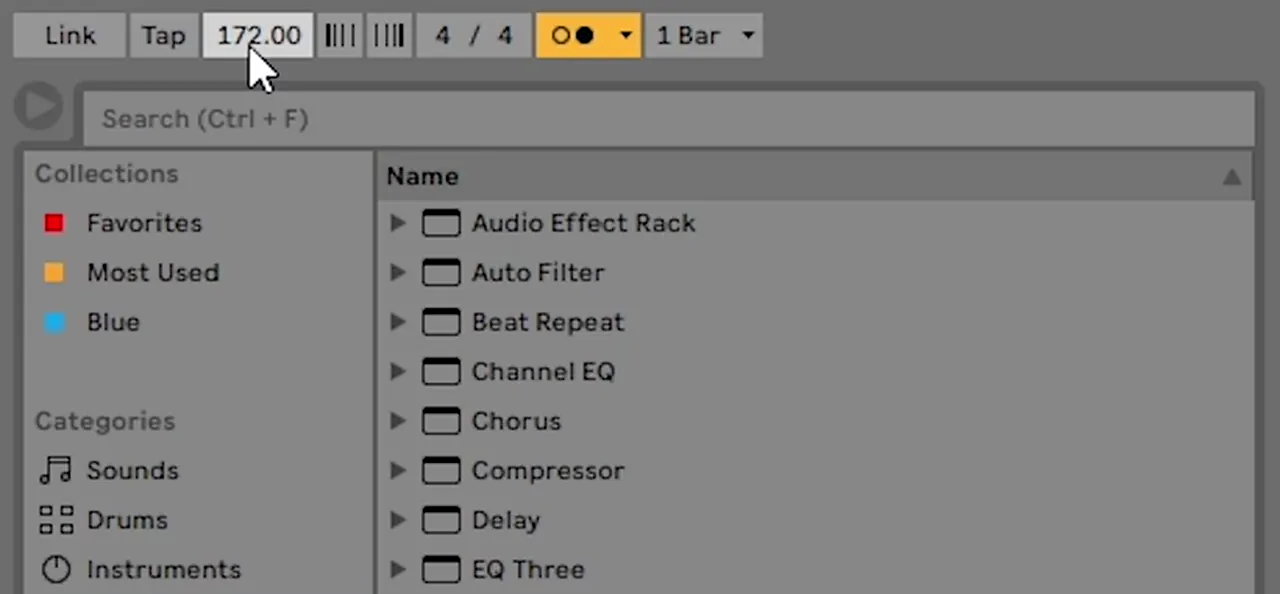
Why 174? Over time it simply became the default, and many DJs play their sets around it. A track at 172 or 175 BPM is still perfectly normal; DJs nudge the tempo a little to match. Our own tutorials show this: our liquid DnB tutorial uses 174 BPM, while our neuro DnB tutorial uses 172 BPM because that tempo suits the groove.
Typical BPM by style
| Style | Typical tempo | Notes |
|---|---|---|
| Liquid | 170–176 | 174 is a very common choice |
| Neurofunk | 172–176 | Tight and precise; 172–174 is common |
| Jump up / dancefloor | 172–176 | Usually close to 174 |
| Rollers | 172–175 | Steady, DJ-friendly grooves |
| Deep / minimal | 170–174 | Some producers go a little slower for weight |
| Jungle | ~160–170 classic; faster today | Many modern jungle tracks run at full DnB tempo |
| Halftime | 170–175 | Snare on beat 3, so it feels like ~85–87 BPM |
Ranges are typical, not fixed. For the sound of each style, see drum and bass subgenres explained.
What is halftime in drum and bass?
Halftime keeps the drum and bass tempo but moves the snare from beats 2 and 4 to beat 3, so the drums feel half as fast. At 174 BPM, halftime feels like 87 BPM. Producers use it for whole tracks, intros, breakdowns or a switch-up in the second drop, and DJs can mix it straight into normal DnB.
| Feel | Snare position | Feels like |
|---|---|---|
| Two-step (normal DnB) | Beats 2 and 4 | 174 BPM: fast and rolling |
| Halftime | Beat 3 | ~87 BPM: heavy and spacious |
Because the tempo never changes, you can switch between the two feels inside one project. That's one of the easiest switch-ups in the genre: run the first half of drop 2 in halftime, then snap back to the two-step for the second half.
How long is a bar at 174 BPM?
One bar of 4/4 at 174 BPM lasts about 1.38 seconds, so 16 bars last about 22 seconds, 32 bars about 44 seconds and 64 bars about 88 seconds. The formula is simple: seconds per bar = 240 ÷ BPM. It's a handy way to sanity-check how long your sections really are.
| Bars | At 170 BPM | At 174 BPM |
|---|---|---|
| 1 bar | 1.41 s | 1.38 s |
| 8 bars | 11.3 s | 11.0 s |
| 16 bars | 22.6 s | 22.1 s |
| 32 bars | 45.2 s | 44.1 s |
| 64 bars | 1 min 30 s | 1 min 28 s |
Why does drum and bass use 8, 16 and 32-bar phrases?
Drum and bass is built in 8, 16 and 32-bar phrases because that's how DJs mix and how listeners feel time. When every change lands on a phrase boundary, a DJ can line up your intro with the end of another track, and the crowd senses a drop coming exactly when it should.
A common rule of thumb: small changes every 4 or 8 bars, bigger changes every 16, and new sections every 32 or 64. Inside a phrase, the last bar is prime real estate for a fill, a drum drop-out or a bass turnaround that tells the listener something new is coming.
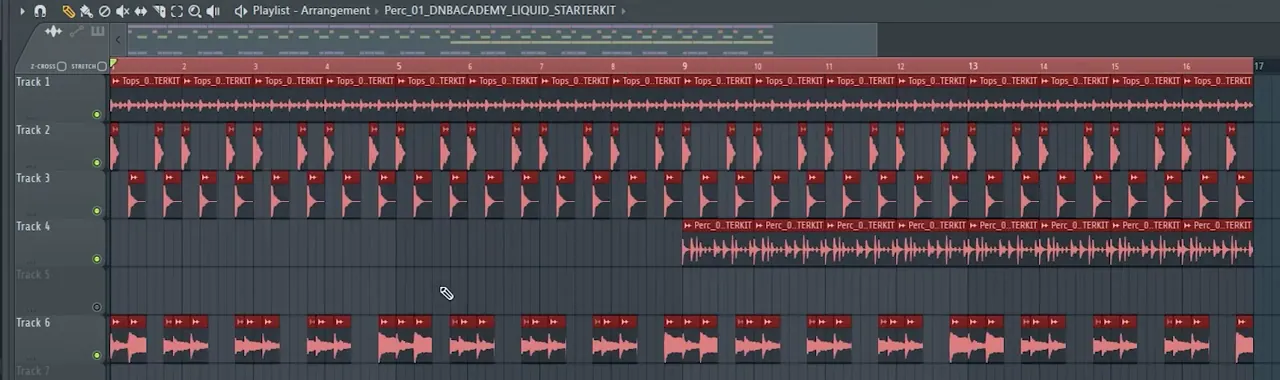
Phrasing is also why it pays to work with locators or markers. Drop one at every 16 bars and you'll instantly see whether a section is two bars too long, which is one of the most common reasons a track feels "off" to a DJ.
What is the standard drum and bass song structure?
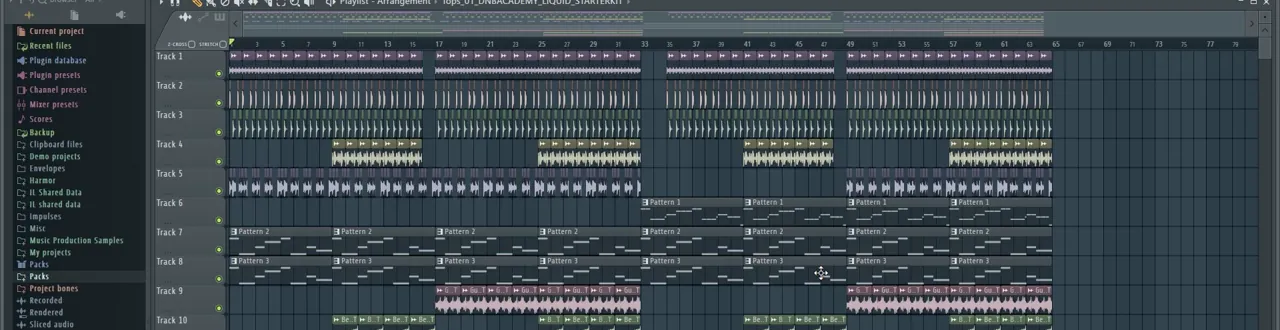
A DJ-friendly drum and bass track usually runs intro, build, drop 1, breakdown, build, drop 2, outro. Common bar counts are a 32-bar intro, a 16-bar build, a 64-bar drop, a 32-bar breakdown, another 16-bar build, a second 64-bar drop and a 32-bar outro. These are common practice, not rules: shorter drops and longer breakdowns are both normal.
| Section | Typical bars | What happens | Why it matters |
|---|---|---|---|
| Intro | 16–32 (often 32) | Drums or percussion, light atmosphere, hints of the hook; little or no sub bass | Gives DJs a clean, beat-led section to mix in |
| Build-up | 8–16 | Risers, kick or snare rolls, filters opening, a short gap before the drop | Builds tension and signals the drop |
| Drop 1 | 32–64 | Full drums, main bass and hook, often four 16-bar phrases with small changes | The main energy of the track |
| Breakdown | 16–32 | Drums out or reduced; chords, pads, vocals or melody | A reset, so the next drop hits harder |
| Build-up 2 | 8–16 | Like the first build, often shorter or with a twist | Rebuilds tension quickly |
| Drop 2 | 32–64 | A variation or switch-up: new bass sounds, new drums or halftime | Keeps the second drop fresh |
| Outro | 16–32 (often 32) | Strips back to drums or percussion, mirroring the intro | Lets the next DJ mix out cleanly |
Add those typical bar counts up and you get 256 bars, which lasts just under six minutes at 174 BPM. That's why many club-focused DnB tracks run about 4 to 6 minutes, while radio edits trim the intro and outro.
Intro: make it DJ-mixable
Start with drums or percussion and keep the sub bass out, or very low, because two subs clashing in a mix sounds muddy. Introduce one element every 8 or 16 bars so the DJ can hear where the phrases are. Hints of your hook, filtered or on a different sound, build anticipation without giving the drop away.
Build-up: create tension
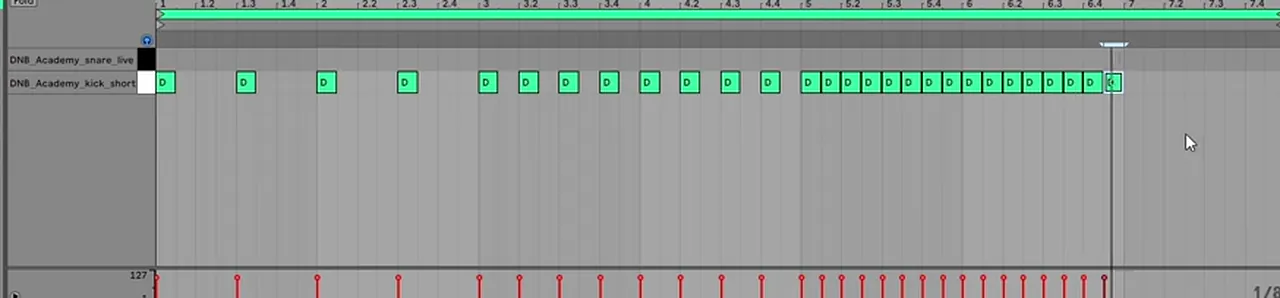
Rolls, risers, reversed FX and filters opening up all tell the listener a drop is coming. An accelerating kick or snare roll over the last bars is a classic move, and a beat or two of near-silence right before the drop makes it hit much harder.
Drop 1: deliver the idea
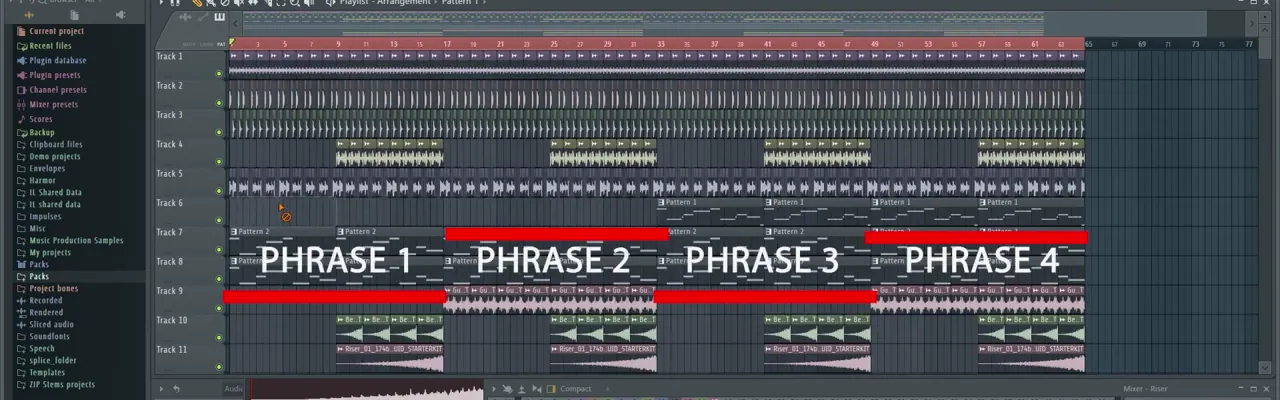
This is where the main bass, drums and hook play together. A useful approach is four 16-bar phrases with something removed or changed in each, so the drop keeps moving without losing its identity.
Breakdown: reset the energy
Take the drums out, or strip them back, and let chords, pads, vocals or a melody breathe. The contrast is the point: the quieter and wider the breakdown, the bigger the next drop feels.
Drop 2 and the outro
Drop 2 should feel familiar but not identical (more on switch-ups below). The outro mirrors the intro: strip back to drums or percussion so the next DJ can mix out, and end on a phrase boundary.
How do you keep energy up in a DnB track?
Keep energy up by changing something at the end of every phrase and making the second drop different from the first. Drum fills, drop-outs, new bass sounds and a "switch-up" (a deliberate change of pattern or feel) stop a 64-bar drop from feeling like one loop on repeat.
- Fills and drop-outs: remove the drums for the last beat or bar of a phrase, or add a fill, to signal what comes next.
- Sound swaps: keep the rhythm but switch the bass sound, or change its tone with an EQ or filter.
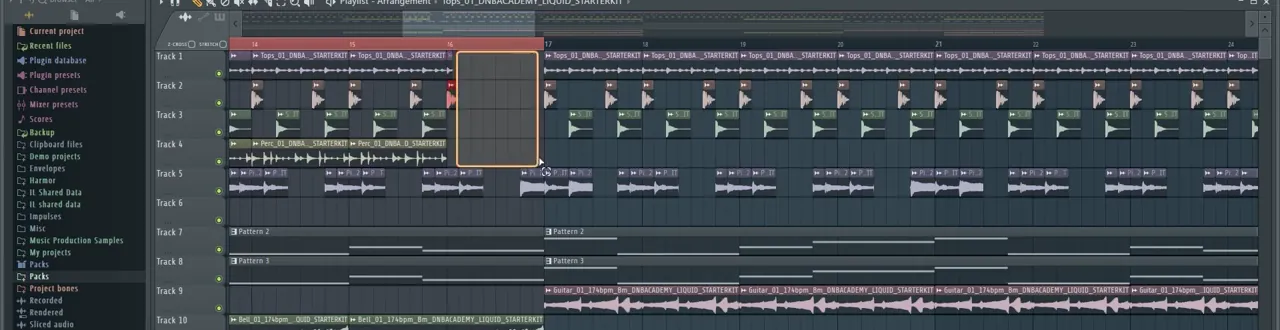
- Top-loop changes: add, remove or swap the break or percussion loop every 16 bars.
- Switch-ups: in drop 2, try a halftime section, a new bassline or a different drum pattern, then return to the original.
How do you arrange a drum and bass drop?
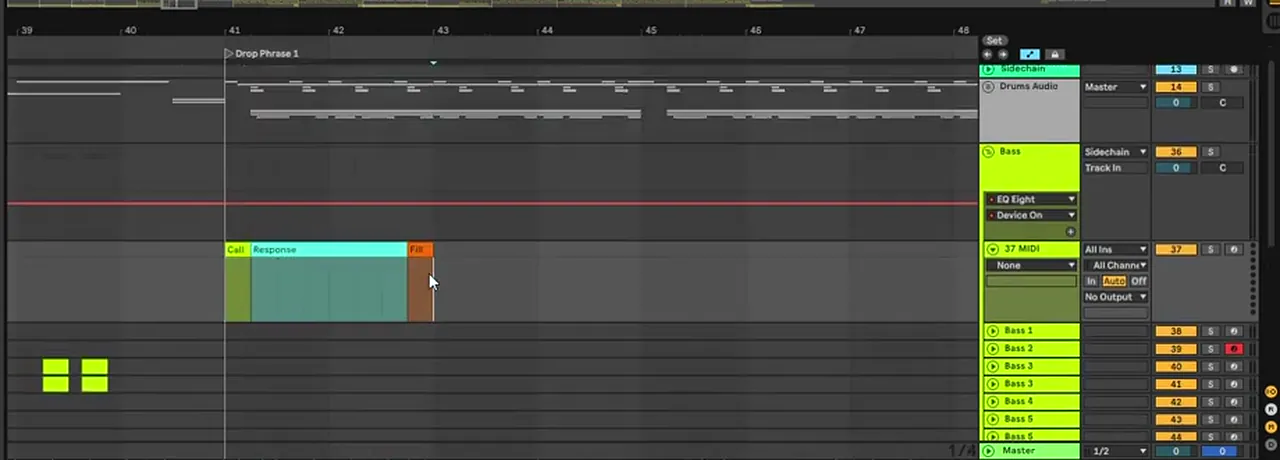
Build the drop from short, repeating patterns. A common approach is a 2-bar pattern of call and response: a call bass on the first beat, response basses in the middle and a fill at the end of bar 2. Repeat it across 8 bars, changing sounds rather than rhythm, and finish with a bigger turnaround in the last bar.
Our neuro bass patterns tutorial walks through exactly this. The call and fill change every 2 bars, the response changes every 4, and the 8-bar phrase ends on a turnaround:
| Bars | Call | Response | Ending |
|---|---|---|---|
| 1–2 | Sound 1 | Response A | Fill 1 |
| 3–4 | Sound 2 | Response A | Fill 2 |
| 5–6 | Sound 1 | Response B | Fill 1 |
| 7–8 | Sound 2 | Response B | Turnaround |
Once the 8-bar phrase works, duplicate it into 16 bars and swap sounds again. Keep the rhythm consistent: if every 2 bars has a new rhythm, the drop loses its groove. The same idea works for liquid, rollers or jump up; only the sounds change. For the bass sounds themselves, try our foghorn bass, roller bass or techy roller bass tutorials, and make sure your drums can cut through with our punchy drums guide.
Drum and bass arrangement checklist
Use this checklist when you turn a loop into a full track. It follows common DJ-friendly practice; break the rules once you know why they're there.
- Set the tempo first. Choose 174 BPM, or anything from about 170 to 176, before you write a note. Changing it later shifts the feel of your drums and any time-based effects.
- Write the drop loop. Get 8 to 16 bars of drums, bass and your main hook sounding great before you arrange anything. That loop is the heart of the track.
- Block out the sections. Add locators or markers for a 32-bar intro, 16-bar build, 64-bar drop, 32-bar breakdown, 16-bar build, 64-bar drop and 32-bar outro, then adjust to taste.
- Make the intro and outro DJ-friendly. Start and end with drums or percussion and little or no sub bass, and keep every change on an 8 or 16-bar boundary.
- Vary every phrase. Change something at least every 16 bars: remove or add an element, swap a bass sound, or add a fill on the last bar of the phrase.
- Build tension into each drop. Use rolls, risers, filter sweeps and a short moment of silence so the drop lands with impact.
- Make drop 2 different. Give the second drop a switch-up: new bass sounds, a different drum pattern or a halftime section.
- Listen from the start. Play the whole track from bar 1, not just loops, and fix any moment where the energy sags or a change arrives too early or late.
Want feedback on your arrangements as you go? DNB Foundations includes weekly live feedback calls on your tracks, our production course guide maps out the learning routes, and if you'd like one-to-one help, you can see the mentorship. New to the genre? Start with what is drum and bass?.
Free download
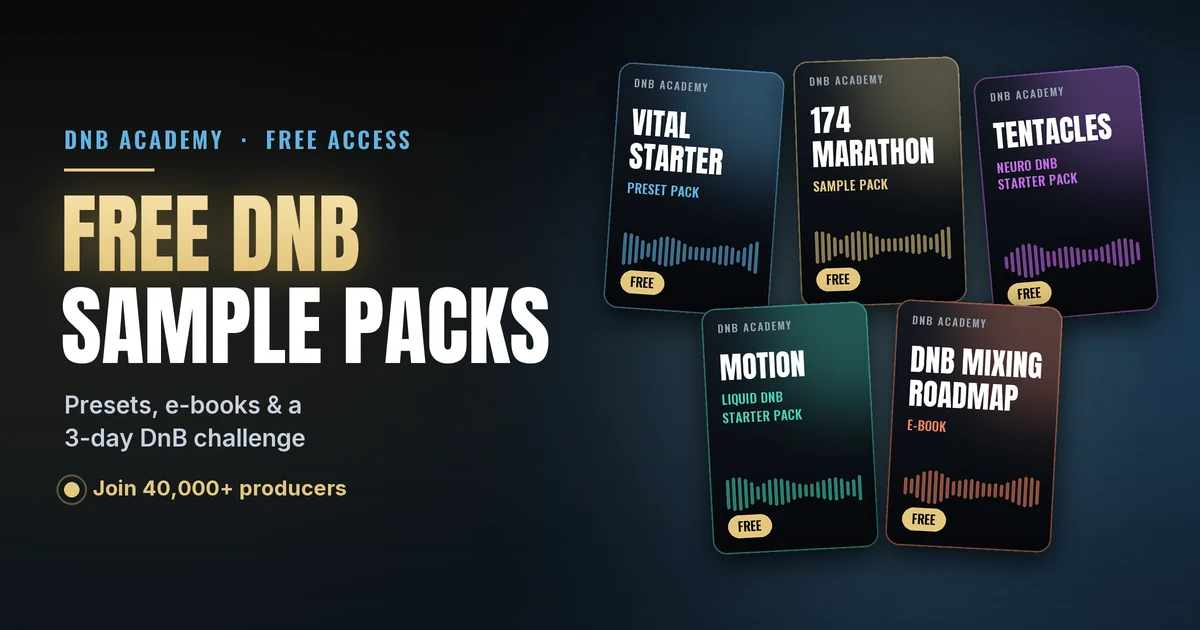
Get the free 174 Marathon Sample Pack
Put this structure to work. The 174 Marathon pack gives you sounds for every section, and it's free in DNB Academy Free Access with four more DnB packs.
- 100+ royalty-free samples: drums, bass, FX, melodics and more
- Also free: neuro and liquid starter packs with Ableton and FL Studio project files, a sample and preset toolkit and Vital presets
- Mixing and mastering e-books and a 3-day DnB challenge for Ableton Live and FL Studio
Join 40,000+ producers in DNB Academy Free Access. Just your artist name and email, no card needed.
Go deeper
See how artists arrange whole tracks
Want to study full drops and arrangements in one style? These artist courses and packs go deeper.
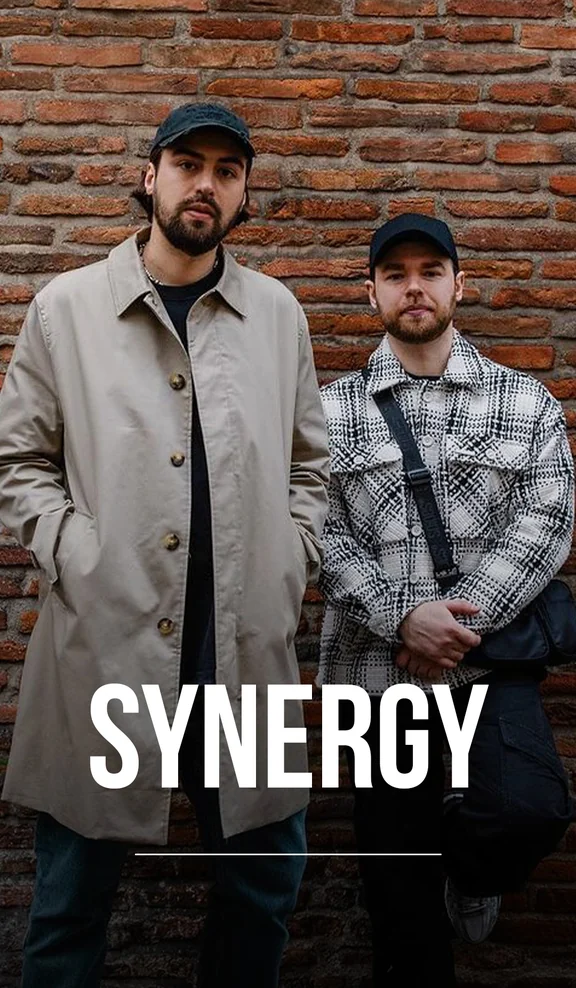 Production courseSynergy production courseNeurofunk / Future: an artist course on neuro and future DnB.
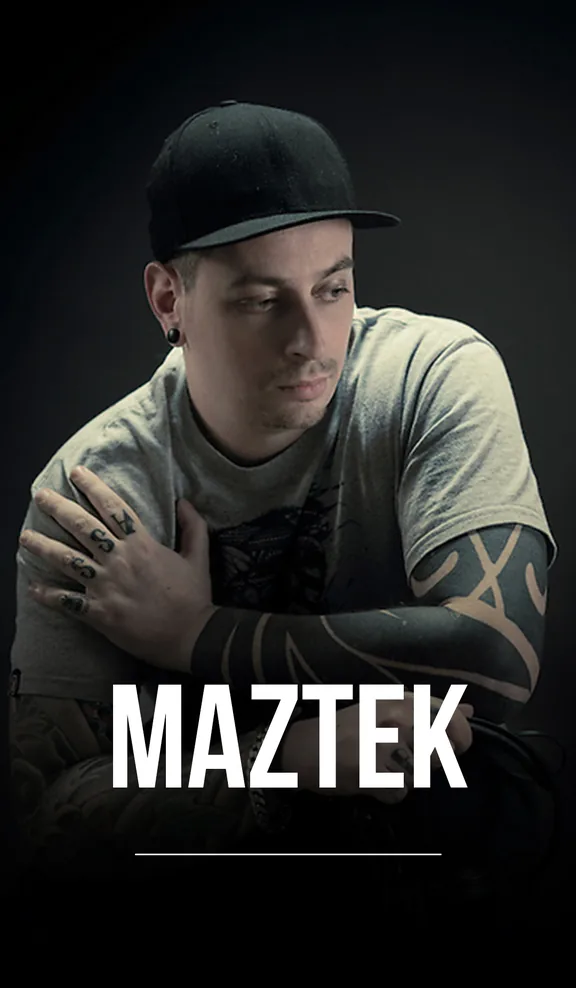 Production courseMaztek production courseNeurofunk: an artist course on neurofunk production.
 Production courseBop production courseLiquid / Micro-funk: a full artist course on producing liquid drum & bass.
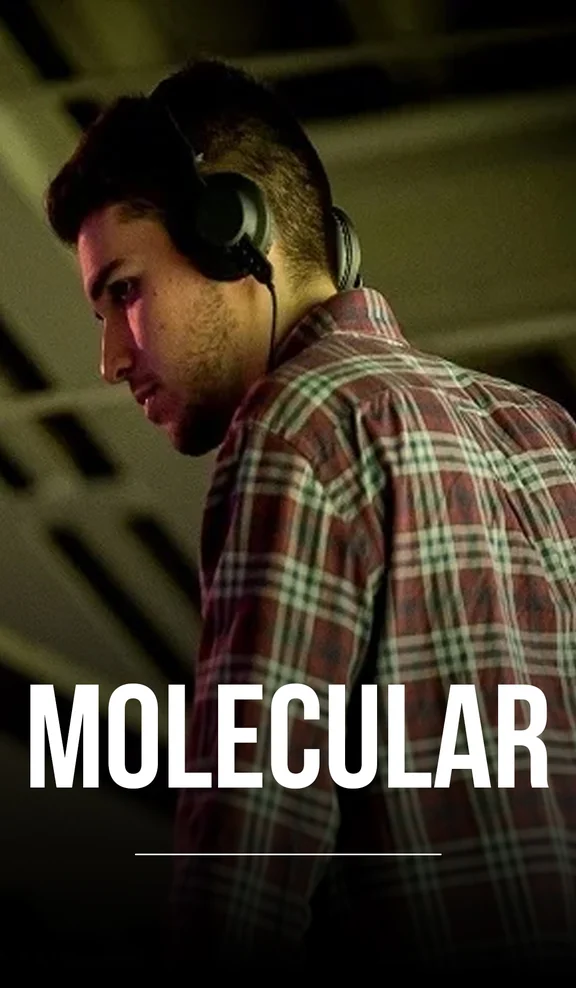 Production courseMolecular production courseTechy / Rollers: an artist course on rolling, techy DnB.
 Sample packDNB Drums Vol. 1 sample packDrum & bass drum samples to build and layer beats with.
Every artist course, preset bundle and sample pack is also in The Vault. Browse courses
Related tutorials
All tutorials → Ableton · NeuroNeuro Bass Patterns: How to Write DnB Basslines8 min read · Video + guide
 Ableton · NeuroHow to Make Neuro Drum and Bass in Ableton Live12 min read · Video + guide
 FL Studio · LiquidHow to Make Liquid Drum and Bass in FL Studio11 min read · Video + guide
 Mixing · DrumsHow to Make DNB Drums Punchy: 3 Mixing Techniques8 min read · Video + guide
 Vital · Bass designHow to Make a Roller Bass in Vital8 min read · Video + guide
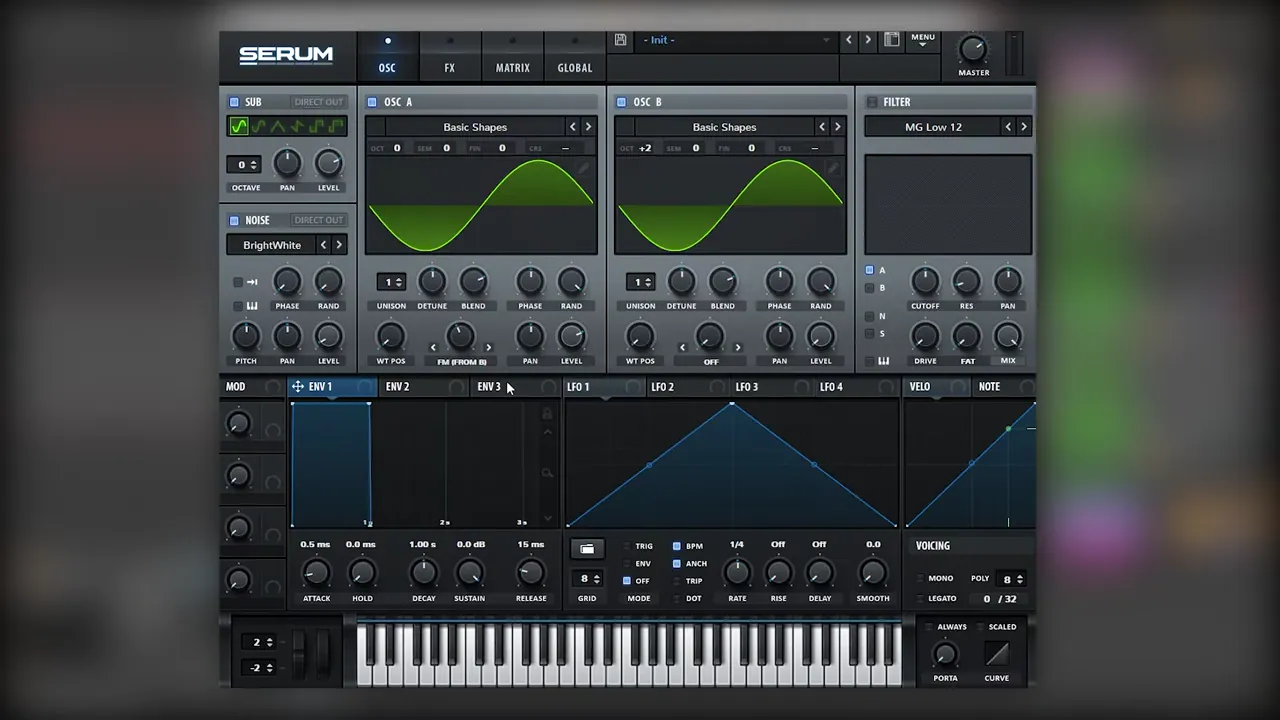 Serum · Bass designHow to Make a Techy Roller Bass in Serum7 min read · Video + guide
FAQ
What BPM is drum and bass?
Drum and bass is usually made at about 170–176 BPM, and 174 BPM is the most common tempo for modern tracks. Older jungle often ran a little slower, roughly 160–170 BPM. These are typical ranges rather than strict rules.
Is drum and bass 170 or 174 BPM?
Both are normal. 174 BPM is the most common modern choice, and many DJs play their sets around it, but plenty of tracks sit at 170, 172 or 175 BPM. Small differences are easy for DJs to adjust, so pick the tempo that makes your groove feel right.
What BPM is halftime drum and bass?
Halftime drum and bass keeps the normal DnB tempo, usually around 170–175 BPM, but places the snare on beat 3 instead of beats 2 and 4. At 174 BPM that makes the drums feel like roughly 87 BPM, while the track still mixes with regular drum and bass.
How many bars is a drum and bass intro?
A DJ-friendly drum and bass intro is commonly 16 or 32 bars, with 32 a popular choice for club tracks. It usually starts with drums or percussion and little or no sub bass, so a DJ can mix it over the end of the previous track.
How long is a drum and bass drop?
A common drop length is 32 or 64 bars, often built from four 16-bar phrases with small changes in each. At 174 BPM, 64 bars lasts about 88 seconds. Many tracks use a shorter first drop or a switch-up in the second drop to keep things fresh.
How long is a typical drum and bass track?
Club-focused drum and bass tracks often run about 4 to 6 minutes, because DJ-friendly intros and outros add length. A layout of 32-bar intro, 16-bar build, 64-bar drop, 32-bar breakdown, 16-bar build, 64-bar drop and 32-bar outro lasts just under 6 minutes at 174 BPM. Radio edits are usually shorter.
Why is drum and bass arranged in 16-bar phrases?
Because DJs and listeners count in phrases. When your changes land on 8, 16 and 32-bar boundaries, a DJ can line up your intro, drops and outro with another track, and the crowd feels each change arrive exactly when expected.
Next steps
You now have the tempo, the bar counts and a checklist. The next step is to finish a track with them. Here's where to go next:
Free sample packs
Five free DnB sample and preset packs, e-books and a 3-day challenge.
Get free packsCourse guide
How to learn drum and bass production step by step, and which course fits your level.
Read the guide1:1 Mentorship
Personal guidance on your music from a mentor, built around your goals.
See the mentorship