DnB explained · Beginner guide
What Is Drum and Bass? DnB Music Explained
Drum and bass (DnB) is a genre of electronic dance music built on fast breakbeat drums, usually at around 170–176 BPM, and deep, heavy basslines. It grew out of the UK's early-1990s rave and jungle scene. Its signature is the two-step groove: a kick and snare pattern rolling over a sub bass you feel as much as hear.
- Tempo170–176 BPM, 174 most common
- DrumsTwo-step breakbeats
- BassSub + mid-bass
- OriginsUK, early 1990s
What does drum and bass mean?
The name says it all: drum and bass is music where the drums and the bass do the heavy lifting. Everything else, from pads and vocals to FX, is arranged around a fast, busy drum pattern and a powerful low end. You'll see it written as drum and bass, drum & bass, drum'n'bass, DnB or D&B. They all mean the same genre.
DnB music is mostly made for DJs and big sound systems, so tracks are built in clear blocks that are easy to mix. But it's a wide family. The same tempo covers soulful, musical liquid, dark and technical neurofunk, bouncy jump up and stripped-back minimal. We break all of them down in our guide to drum and bass subgenres.
A few words come up again and again when people talk about DnB. Here's what they mean:
- Breakbeat
- A drum pattern, often sampled from an old funk or soul record, that is cut up and re-sequenced. "Breaks" are the backbone of jungle and still give modern DnB much of its swing.
- Two-step
- The classic DnB beat: a kick on beat 1, a second kick later in the bar and snares on beats 2 and 4.
- Sub bass
- The lowest bass layer, usually a clean sine-like tone you feel more than hear.
- Mid-bass
- The bass layer above the sub that carries the character of the sound, from warm and round to growling and distorted.
- Drop
- The main section of a track, where the full drums and bass come in after a build-up.
What are the defining traits of drum and bass?
Four things make a track sound like drum and bass: a fast tempo of around 170–176 BPM, breakbeat-style drums, a deep sub bass with an energetic mid-bass on top, and the two-step kick and snare feel. Change one of them and you quickly drift into another genre.
Tempo: fast, but it can feel half as fast
Most modern DnB sits between about 170 and 176 BPM, with 174 BPM the most common choice. Because the snare lands on beats 2 and 4, your body often locks onto a slower pulse at half the tempo, around 87 BPM. That's why you can nod along slowly or dance fast to the same track. Our guide to drum and bass BPM and song structure covers tempo and halftime in more detail.
Breakbeat drums
Early jungle producers sampled drum breaks from funk and soul records, sped them up and chopped them into new patterns. Modern DnB often uses programmed one-shot kicks and snares instead, but layers breaks or "top loops" underneath for movement and swing. The result is busy, shuffling hats and ghost notes around a hard-hitting kick and snare. If your drums feel thin, our tutorial on making DnB drums punchy walks through parallel compression, soft clipping and snare layering.
Sub bass and mid-bass
The "bass" half of the name usually means two layers: a clean, mostly mono sub that you feel in your chest, and a mid-bass on top that gives the sound its character. That character changes a lot between styles, from the warm, rounded basses of liquid to the growling, resampled sounds of neurofunk. Try our roller bass in Vital or techy roller bass in Serum tutorials to hear how much movement a single patch can have.
The two-step groove
The classic DnB beat puts a kick on beat 1, a second kick on the "and" of beat 3 (or close to it) and snares on beats 2 and 4. The gap between the first kick and the snare, and the skip of the second kick, give the rolling, forward-leaning feel known as the two-step. Here it is in a piano roll:

Where did drum and bass come from?
Drum and bass grew out of the UK rave scene of the early 1990s. Producers in the breakbeat hardcore scene sped up sampled breaks, added heavy, reggae-influenced basslines and created jungle. Through the mid-to-late 1990s a cleaner, more stripped-back and more technical sound developed alongside it, and the name drum and bass took over.
Several threads came together. Rave and hardcore gave the music its energy and its DJ culture. Funk, soul and hip-hop records supplied the breakbeats. Reggae, dub and sound system culture brought the weight of the bass, the MCs and the love of a huge low end. Affordable samplers made it possible to chop and re-sequence breaks at speeds no drummer would play.
From there the sound kept splitting into new directions. Some producers went darker and more mechanical; others went lush, atmospheric and jazz-influenced. Over the following decades styles such as neurofunk, liquid, jump up, halftime and minimal all grew their own scenes. The tempo has stayed in roughly the same place for a long time while the sound design has changed enormously, which is a big part of what makes DnB so much fun to produce.
| Era | What happened |
|---|---|
| Early 1990s | UK rave and breakbeat hardcore speed up sampled breaks and add heavy bass. |
| Early to mid-1990s | Jungle takes shape: chopped breaks, reggae and dub-style basslines, MC culture. |
| Mid to late 1990s | "Drum and bass" becomes the common name. Darker, techier styles and atmospheric, jazz-influenced styles develop. |
| 2000s | Neurofunk, liquid and jump up are established styles with their own scenes. |
| 2010s onwards | Halftime, deep/minimal and techy rolling sounds grow; software studios make the genre more accessible than ever. |
Dates are approximate. Scenes overlapped and people still disagree about where one ended and the next began.
How is drum and bass different from jungle, dubstep and house?
Drum and bass is faster than dubstep and house, and cleaner and more programmed than classic jungle. Jungle uses heavily chopped breaks and reggae-style basslines, often at a slightly slower tempo. Dubstep runs at around 140 BPM with a half-step feel. House sits at around 120–128 BPM on a steady four-on-the-floor kick.
| Genre | Typical tempo | Drums | Bass | Feel |
|---|---|---|---|---|
| Drum and bass | ~170–176 BPM (174 most common) | Two-step kick and snare, layered breaks and top loops | Clean sub plus a designed mid-bass | Fast and rolling |
| Jungle | ~160–170 BPM in classic tracks; often faster today | Fast, heavily edited breakbeats | Deep, often reggae or dub-style subs | Raw and frantic drums over a rolling bass |
| Dubstep | ~140 BPM | Half-step: snare on beat 3 | Wobbles, growls and heavy sub | Heavy and spacious |
| House | ~120–128 BPM | Four-on-the-floor kick, off-beat hats | Groove-led basslines | Steady and hypnotic |
Drum and bass vs jungle
Jungle is the parent. Its drums are the star: breaks are sliced, re-pitched and rolled into complex patterns, while the bass often moves slowly underneath. Drum and bass kept the tempo and the low end but moved towards tighter, more programmed drums and more detailed bass design. Plenty of producers still blend the two, and some modern jungle runs at full DnB tempo.
Drum and bass vs dubstep
The two share a love of heavy bass and sound-system culture, but the beat is different. Dubstep's snare lands once per bar on beat 3; DnB's lands twice, on 2 and 4, at a much higher tempo. Halftime DnB sits in between: it keeps the DnB tempo but moves the snare to beat 3, so it feels heavy and slow while still mixing with normal DnB.
Drum and bass vs house
House is built on a kick on every beat. DnB almost never uses a straight four-on-the-floor kick; its energy comes from syncopation, the space between kick and snare, and the busy breaks around them.
What are the main types of drum and bass?
There's no official list, but most producers and DJs would recognise these styles. They all share the same tempo range; what changes is the drums, the bass sound design and the mood.
- Liquid: soulful and musical, with chords, pianos and vocals over rolling drums.
- Neurofunk: dark and technical, with complex, heavily processed basses.
- Jump up: bouncy, playful, riff-led basslines made for a reaction.
- Rollers: hypnotic, repetitive basslines that keep the groove moving.
- Deep / minimal: sparse, dark and sub-heavy, with lots of space.
- Dancefloor: big builds and big drops that bring melody and weight together.
- Jungle: the roots, with chopped breaks and reggae-style bass.
- Halftime: DnB tempo with a half-speed drum feel.
For BPM ranges, drum and bass sound traits and a production tip for each, read drum and bass subgenres explained.
How do you start making drum and bass?
Start with the drums and the bass, at around 174 BPM, in any DAW. Program a two-step beat, add a sub and a mid-bass, then arrange your ideas in 16-bar phrases. Free samples and step-by-step tutorials get you to a finished first track much faster than starting from a blank project.
- Pick a DAW you already have. Ableton Live and FL Studio are both popular for DnB, but any DAW works. Free synths like Vital cover a lot of ground.
- Set the tempo to 174 BPM. Anywhere from 170 to 176 is normal. Our BPM and structure guide explains why.
- Build the beat. Follow the drum steps in our liquid DnB tutorial for FL Studio or neuro DnB tutorial for Ableton, then make it hit harder with our punchy drums guide.
- Write a bassline. Keep the sub simple and let the mid-bass do the talking. Our neuro bass patterns tutorial shows how to build a drop from call and response.
- Design one signature sound. A foghorn bass, a roller bass or a dark, minimal bass gives your track an identity.
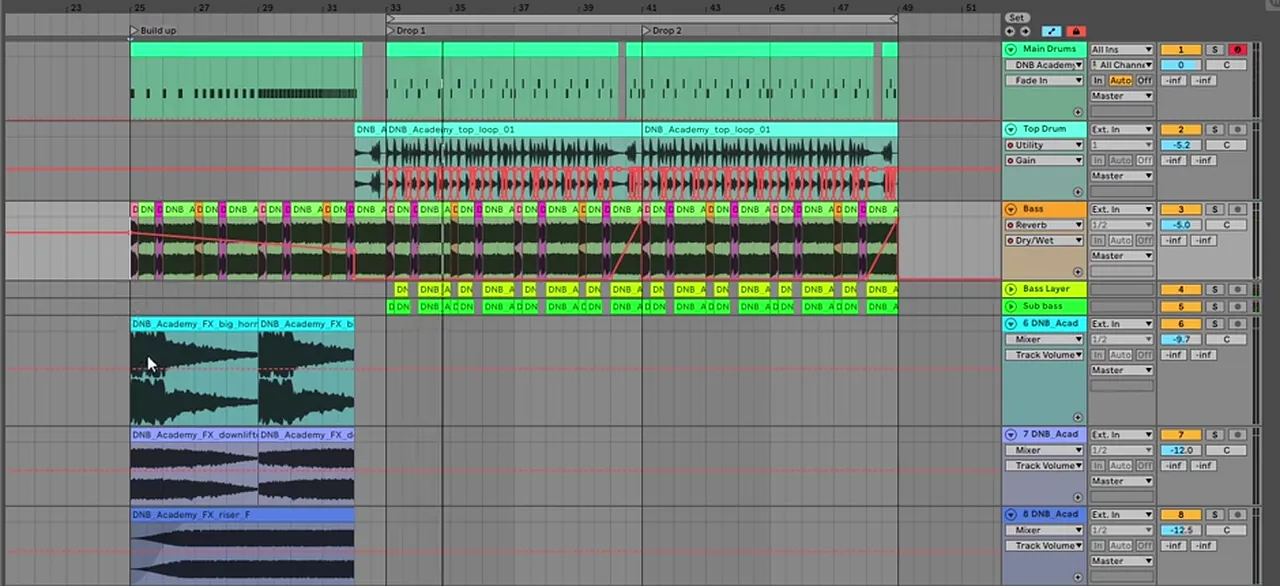
- Arrange it. Intro, build, drop, breakdown, second drop, outro, in 16 and 32-bar blocks. See our DnB song structure guide.
Not sure which tutorial to start with? Pick the style you listen to most:
| If you like | Start with |
|---|---|
| Liquid, melodic DnB | How to make liquid drum and bass in FL Studio |
| Dark, heavy neuro | How to make neuro drum and bass in Ableton, then neuro bass patterns |
| Rolling, techy grooves | Roller bass in Vital or techy roller bass in Serum |
| Big, horn-like basses | Foghorn bass in Vital |
| Deep, minimal sounds | Dark, minimal bass sound design in Vital |
| Harder-hitting drums | How to make DnB drums punchy |
If you'd rather learn the whole process in order, our drum and bass production course guide explains the routes, from free tutorials to DNB Foundations, a structured course with weekly live feedback calls. And if you want one-to-one help with your own tracks, you can look at our mentorship.
Free download
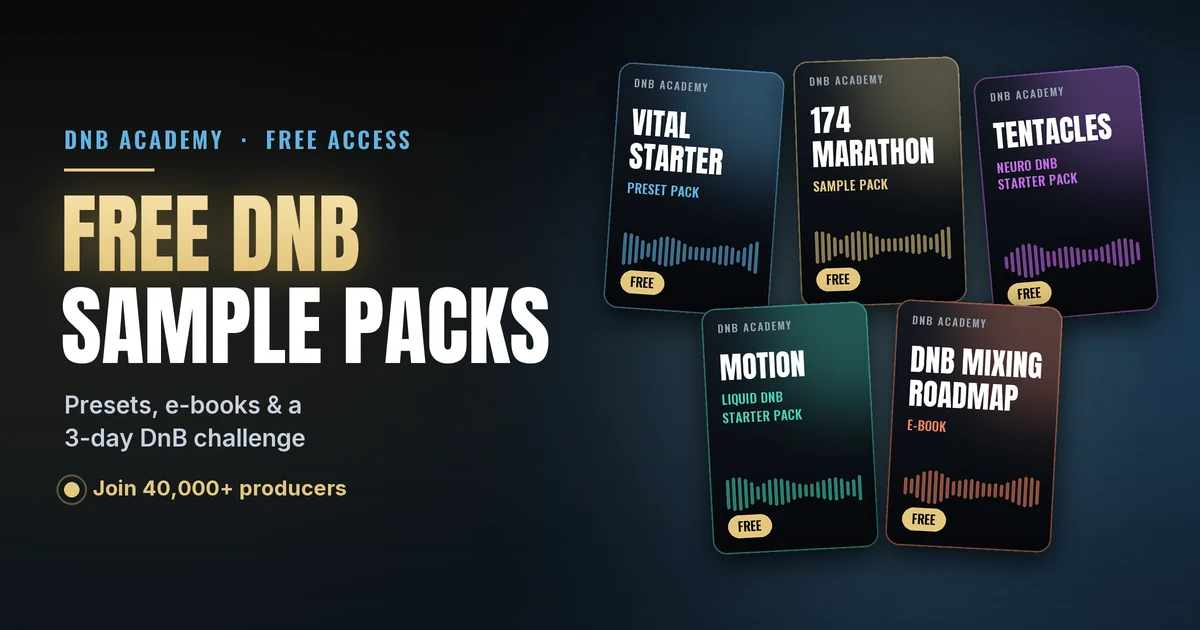
Get the free 174 Marathon Sample Pack
The quickest way to hear what you've just read is to make some. The 174 Marathon pack is free in DNB Academy Free Access, alongside four more DnB packs.
- 100+ royalty-free samples: drums, bass, FX, melodics and more
- Also free: the Tentacles Neuro and Motion Liquid starter packs, the Discord DnB Production Toolkit and the Vital Starter Preset Pack
- Mixing and mastering e-books and a 3-day DnB challenge for Ableton Live and FL Studio
Join 40,000+ producers in DNB Academy Free Access. Just your artist name and email, no card needed.
Go deeper
Learn a style from the artists
Found a style you love? These artist courses and packs go deep on one sound.
 Production courseBop production courseLiquid / Micro-funk: a full artist course on producing liquid drum & bass.
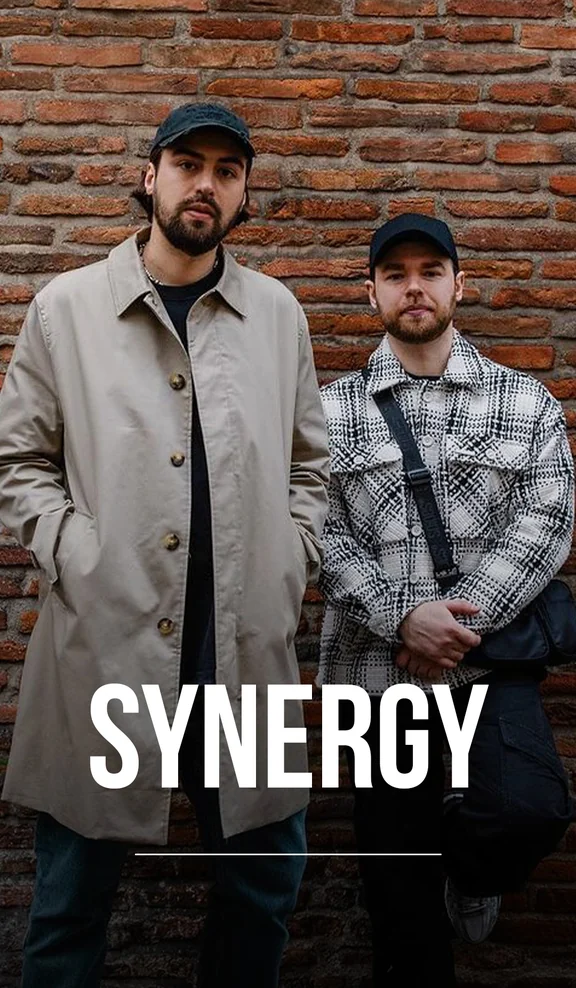 Production courseSynergy production courseNeurofunk / Future: an artist course on neuro and future DnB.
 Production courseMolecular production courseTechy / Rollers: an artist course on rolling, techy DnB.
 Sample packDNB Drums Vol. 1 sample packDrum & bass drum samples to build and layer beats with.
Every artist course, preset bundle and sample pack is also in The Vault. Browse courses
Related tutorials
All tutorials → FL Studio · LiquidHow to Make Liquid Drum and Bass in FL Studio11 min read · Video + guide
 Ableton · NeuroHow to Make Neuro Drum and Bass in Ableton Live12 min read · Video + guide
 Mixing · DrumsHow to Make DNB Drums Punchy: 3 Mixing Techniques8 min read · Video + guide
 Ableton · NeuroNeuro Bass Patterns: How to Write DnB Basslines8 min read · Video + guide
 Vital · Bass designHow to Make a Roller Bass in Vital8 min read · Video + guide
 Vital · Bass designDark, Minimal DnB Bass Sound Design in Vital7 min read · Video + guide
FAQ
What is drum and bass in simple terms?
Drum and bass is fast electronic dance music built on breakbeat-style drums and heavy bass. Most tracks run at around 170–176 BPM, with a kick and snare pattern called the two-step rolling over a deep sub bass. It started in the UK in the early 1990s.
What BPM is drum and bass?
Most drum and bass sits between about 170 and 176 BPM, and 174 BPM is the most common tempo for modern tracks. Older jungle often ran a little slower, roughly 160–170 BPM. Treat these as typical ranges rather than strict rules.
What is the difference between drum and bass and jungle?
Jungle came first. It uses heavily chopped and edited breakbeats, reggae and dub-style basslines and often a slightly slower tempo. Drum and bass grew out of it from the mid-1990s with cleaner, more programmed drums, more varied sound design and a tighter two-step groove. Many people still use the two names loosely.
Is drum and bass the same as dubstep?
No. Dubstep usually runs at around 140 BPM with a half-step beat, where the snare lands on beat 3. Drum and bass runs much faster, around 170–176 BPM, with snares on beats 2 and 4. Halftime drum and bass borrows a half-step feel but keeps the drum and bass tempo.
Why is it called drum and bass?
Because the drums and the bass are the core of the music. Everything else, from pads and vocals to effects, is arranged around a fast, busy drum pattern and a powerful low end. You will also see it written as drum & bass, drum'n'bass, DnB and D&B.
Can beginners make drum and bass?
Yes. You need a computer, a DAW such as Ableton Live or FL Studio, headphones and some samples. Start with a two-step beat at 174 BPM, add a sub bass and a simple bassline, and arrange it in 16-bar phrases. Free sample packs and step-by-step tutorials make the first track much easier.
Where can I get free drum and bass samples?
DNB Academy Free Access is a free membership with five drum and bass sample and preset packs, including the 174 Marathon Sample Pack, plus mixing and mastering e-books and a 3-day DnB challenge for Ableton and FL Studio. You sign up with your artist name and email.
Next steps
You now know what drum and bass is and what makes it tick. The best way to really understand it is to make a track. Here's where to go next:
Free sample packs
Five free DnB sample and preset packs, e-books and a 3-day challenge.
Get free packsCourse guide
How to learn drum and bass production step by step, and which course fits your level.
Read the guide1:1 Mentorship
Personal guidance on your music from a mentor, built around your goals.
See the mentorship